 selectvenue
 The lehenga skirt is the first thing that comes to mind when we think of a lehenga – how flared it will be, how richly embroidered it should be, what form it should be in, etc. Some of us even worry about the choli’s design, the way the back is detailed, the length of the sleeves, the style of ornamentation, etc. Nevertheless, the lehenga dupatta is a third crucial part of a bridal lehenga. Saying that the majority of brides are unconcerned about the dupatta is not exaggerating. However, in actuality, the dupatta is quite important. First off, it’s important for the silhouette of the entire bridal ensemble. The bride’s body is greatly complemented by the dupatta’s draping. When worn incorrectly, the dupatta may give the unflattering appearance of being wider or slimmer.
1. Over The Head

The most typical approach to wear a bridal dupatta with a lehenga is in this manner. The bride’s dupatta is neatly placed on her head, secured with a subtle pin to her hairdo, and the remainder is let to fall freely on both sides.
2. Like Gujarati Saree Pallu

The dupatta is draped similarly to the Gujarati-style saree pallu before being placed on the bride’s shoulder. The front portion of the dupatta is then fanned out and pinned to the skirt in the shape of a fan.
3. Cross Body
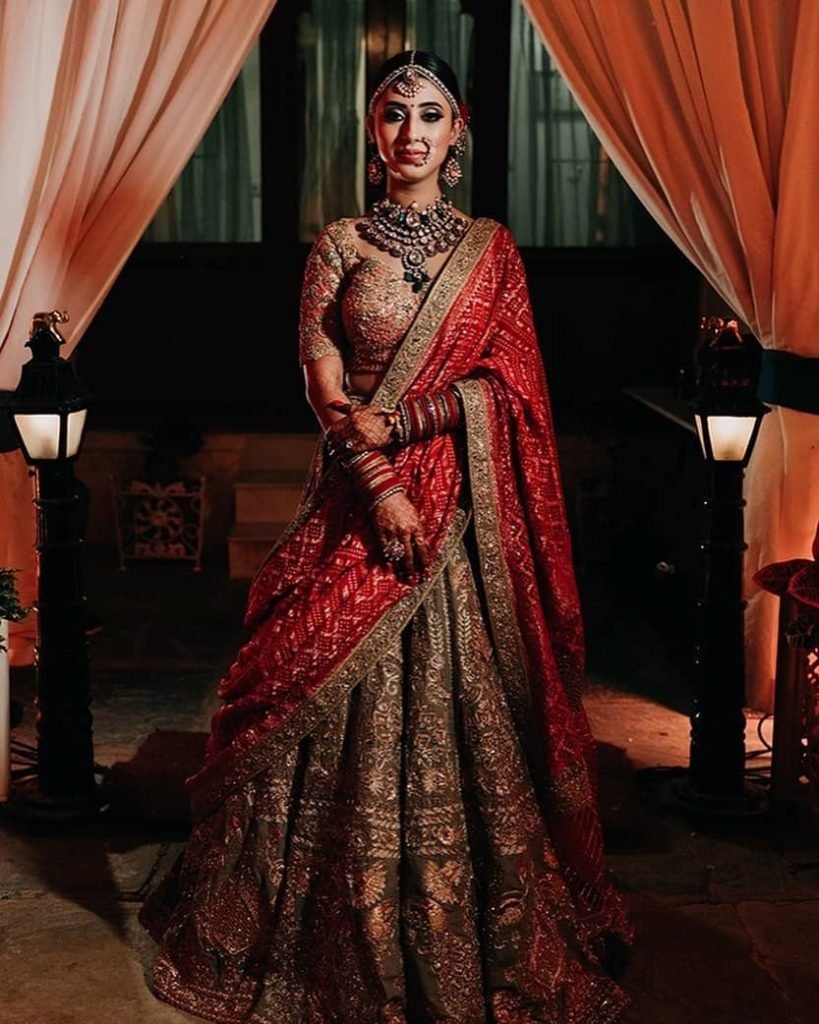
This style of drapery for bridal dupattas is also rather typical. Similar to a typical saree pallu, the dupatta is pleated and draped diagonally across the body. Half Saree or manga Voni are some names for this fashion.
4. One Side Pinning

This method of drapery involves taking a corner of the dupatta and pinning it to the skirt on one side of the body, close to the waist. The remaining dupatta is then taken and casually draped over the other side of the body.
5. Pleated on One side

The dupatta can also be tied in a simple pleat and pinned to the choli on one side of the body. When you want to keep the dupatta out of the way and emphasise the lehenga skirt and choli, this look works beautifully. Even with contrast dupattas, this works. When you want to keep your dupatta neat and out of the way at a mehendi or sangeet event, this is a terrific way to wear it.
6. Like a veil
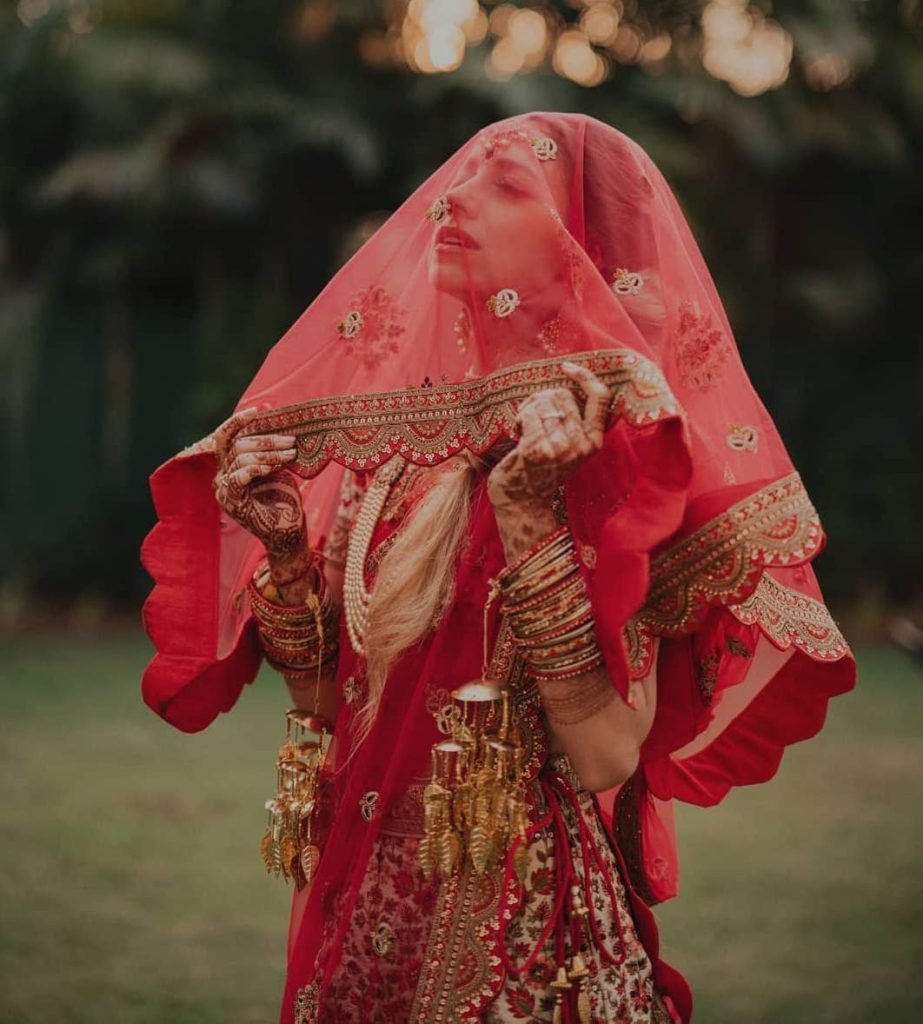
Try this one if you want to show off a distinctive dupatta draping style! In this look, you hide a portion of your face with the dupatta when you wear it over your head. This is suitable for dupattas made of semi-sheer, translucent, or see-through materials like net, chiffon, or organza. This draping approach is a brilliant way to highlight the border on a semi-sheer dupatta that has an elaborate or frilly border.
7. The Double Dupatta Style
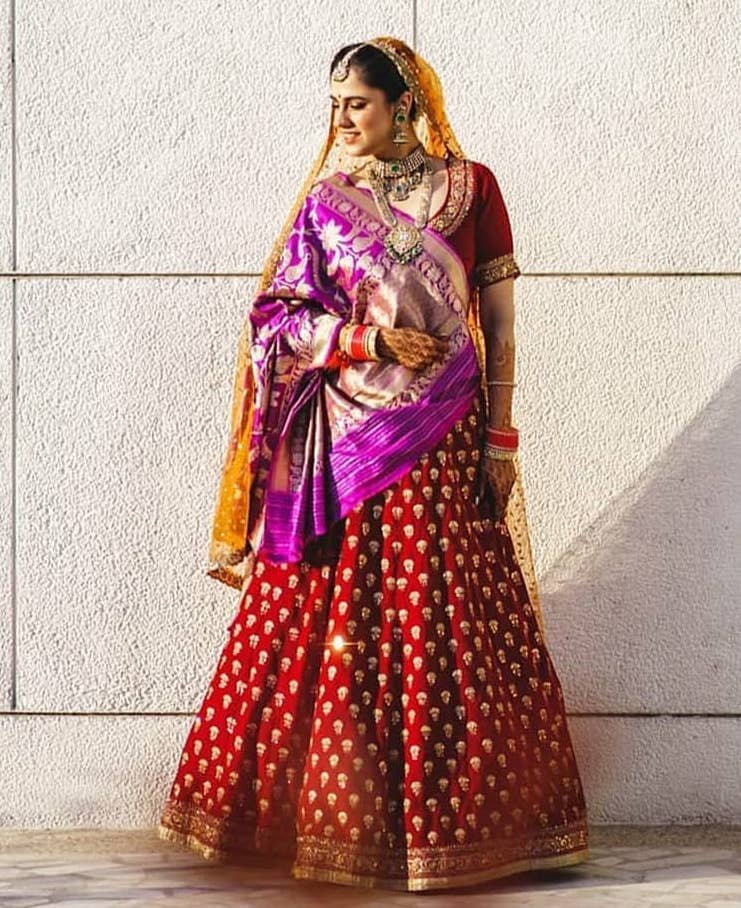
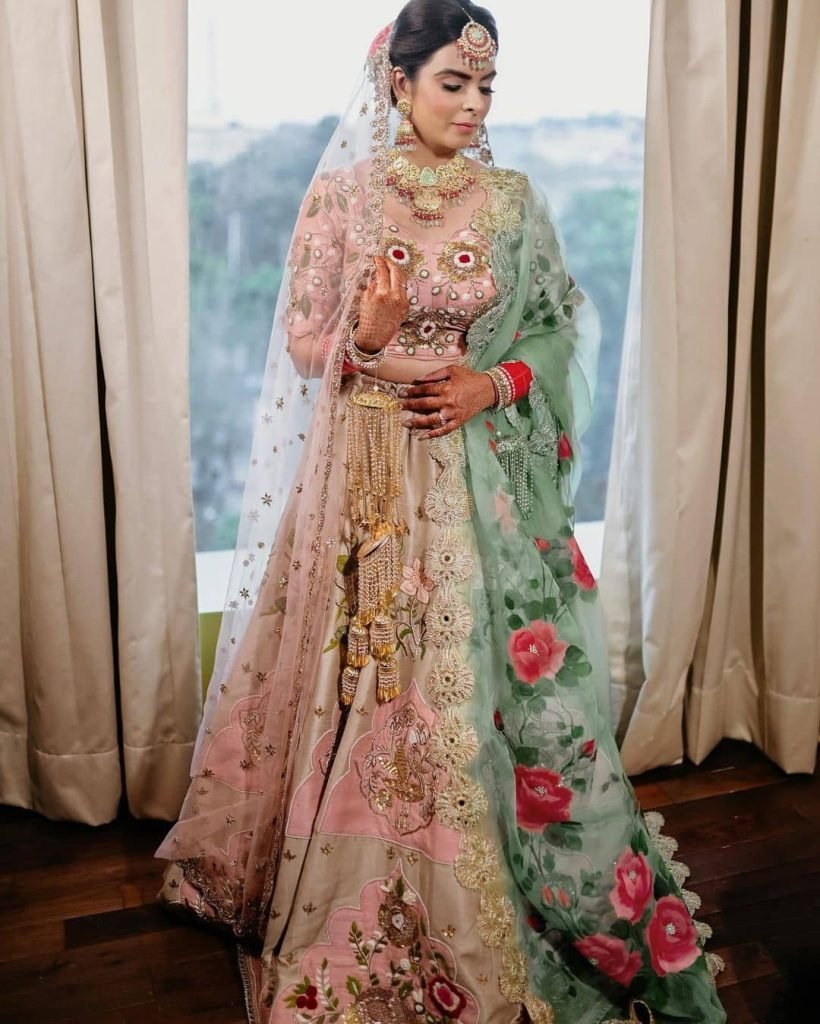
These days, this is the most popular way to drape a dupatta for a wedding. Two dupattas are used in this. The bride is traditionally covered with a single dupatta that complements the hue and design of the lehenga. The colour and pattern of the other dupatta are quite different. For instance, the bride’s other dupatta can be a bandhej or phulkari one in vivid purple or yellow if her lehenga is a light pastel green colour with sequin embroidery. This second dupatta is worn cross-body, pinned to one side, or perhaps even hung like the pallu of a Gujarati saree. The twin dupatta draping approach enables both you and the designer to express your creativity to the fullest.
8. Let it Trail
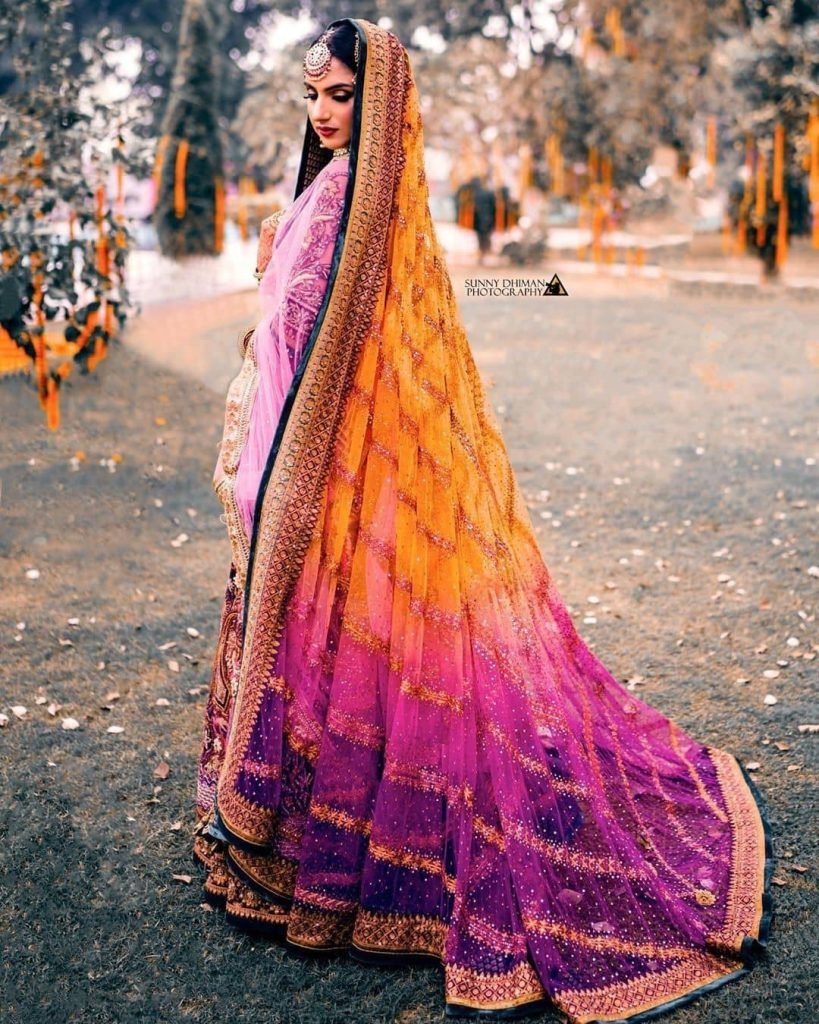
Let the dupatta trail behind you like the veils that go with Christian wedding gowns for a slight variation on the “over the head” draping look. This look is incredibly elegant and pictures great.