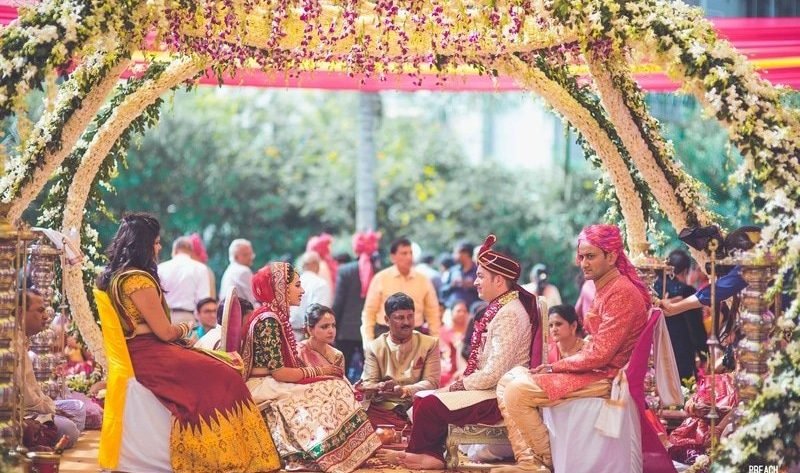
 selectvenue
Gujarat is a state with a variety of cultures. Gujaratis brilliantly represent Indian ancestry via their customs, ceremonies, and traditions. All of the rituals that are a part of the customary Gujarati ceremony are respected when it comes to Gujarati weddings. Gujarat has a wide variety of ceremonies that advise would-be spouses on how to lead happy marriages.
Pre – Wedding Traditions
1. Chandlo Matli

This tradition serves as a formal marriage announcement. Chandlo Matli, then, is a symbol of consent to the relationship. For this event, the bride’s father makes a visit to the home of the groom while carrying a matli, or steel utensil, filled with treats and presents for the groom and his family. Four significant male members of the bride’s family, including the bride’s father, attend the wedding. The groom receives the shagun, a matli filled with gifts and symbolic money, from the bride’s father, who first uses vermouth to draw a red circle, or chandlo, on his ‘would-be’ son-in-forehead. law’s At this ritual, the date of the Gujarati wedding is also determined.
2. Gol Dhana or Sagai

A Gujarati wedding’s second pre-wedding ceremony is called “gol dhana,” which translates as “coriander and jaggery.” Guests receive gol dhana during this engagement ritual, and the bride’s family visits the groom’s house with presents and sweets. With five females from each family’s blessing, the bridegroom and bride exchange rings.
3. Mehendi

A day or two before the wedding, the bride has a mehendi ceremony at her home. Mehendi application is a crucial component of Gujarati wedding ceremonies. On the bride’s palms and maybe even her feet, henna leaf paste is used to create stunning and elaborate designs. According to popular belief, the bride would experience greater love from her spouse the deeper the colour of the decorations. The family’s other members also had mehendi on. It is a female-only event in the majority of homes. Throughout the ritual, women dance and sing together.
4. Sangeet Sandhya

On the night before the wedding day, the sangeet ceremony typically takes place. It could also be observed immediately following the mehendi ritual in some houses. This time, the ceremony is held at the bride’s home, where the groom and his family have travelled. Also joining in on the festivities are friends and family. The two families’ friendship is greatly improved by this incident as well. This evening includes traditional Garba and Dandiya dances as well as contemporary song and dance and folk melodies.
5. Mandap Mahurat & Prayer to Lord Ganesha

Both homes take part in this ceremony. The mandap mahurat, which occurs at the start of all the wedding-related rites, is essentially a puja done to Lord Ganesha. Puja is offered by a priest in an effort to remove any potential barriers from the wedding rituals. Before the building of the wedding mandap, the parents of the bride and the groom each offer a prayer to Mother Earth. Following the prayer, they begin digging to prepare the site for the mandap’s construction.
6. Grah Shanti
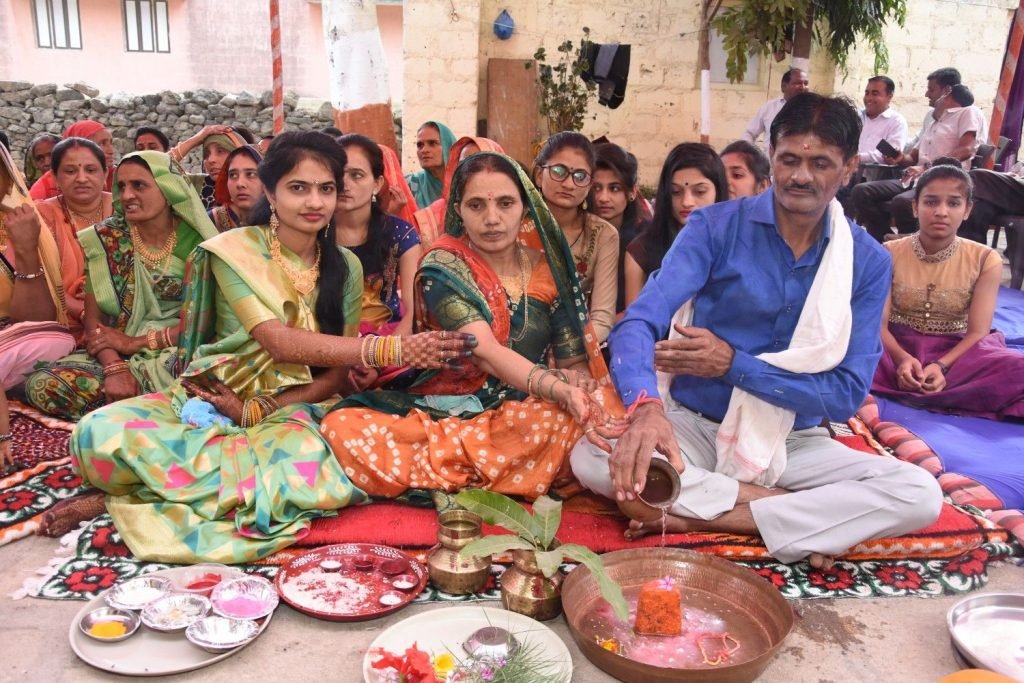
At both residences, a priest also does a puja. Before a Gujarati wedding is planned, the bride and the groom’s horoscopes are typically matched. This could be a sign of unfavourable planetary positions. This puja is performed to ward off any such impediment to the bride and groom’s marital bliss.
7. Pithi

The Gujarati word “pithi” simply refers to a haldi ritual. The groom or bride is covered in haldi during this Gujarati wedding tradition, which is performed the day before the wedding. Both families host it at their separate homes.
8. Baraat or Varghoda
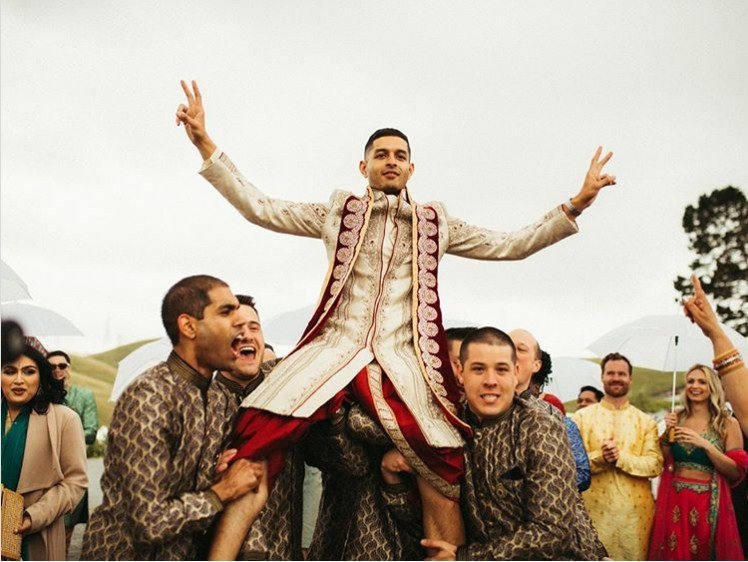
The groom and a group of friends and family members that follow him to the bride’s home are referred to as the baraat. To ward off bad luck or the “evil eye,” the groom’s sister tosses a sack of cash over his head. Once reaching the bride’s home, the procession departs with the groom on a horse, while the party that is following dances and pops fireworks.
9. Ponkvu & Jaan

The bride’s family extends a very big greeting to the groom and the rest of the baraat as they arrive at the location. The bride’s mother then offers the husband an aarti and places a tika on his forehead. It’s now time for a special Gujarati wedding tradition. The bride’s mother tries to get hold of the groom’s nose and drag him inside the venue as he brushes across her feet, and he fights her off. It should go without saying that this is being done for amusement. This tradition expresses the groom’s appreciation and respect for his mother-in-law, who is giving her daughter away as a treasured gift to this guy.
Wedding Rituals
1. Jaimala

With the start of the main wedding rites, the bride and groom are introduced for the first time on the wedding day. Then they exchange garlands. The groom typically uses a stool to stand on a higher pedestal during the opening exchange. He withdraws for the second round to signify equality in the union.
2. Madhuparka
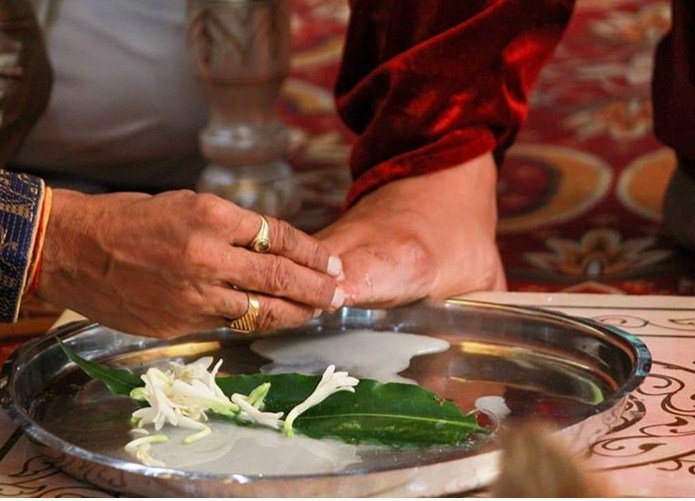
This ceremony ushers in the start of the main wedding ceremonies by bringing the bride and groom together for the first time on the wedding day. After then, they trade garlands. The groom typically uses a stool to elevate himself during the opening round of exchange. In order to signify equality in the marriage, he withdraws for the second round.
3. Antarpaat

The bride is now taken to the mandap by her maternal uncle, and as the mantras for the Gujarati wedding are repeated, a curtain-like piece of opaque fabric is placed between the bride and the groom.
4. Kanyadaan

This tradition represents the groom’s father putting his trust in his future son-in-law. His son-in-law is now in charge of ensuring that his daughter is content moving forward.
5. Pheras

In contrast to other Indian traditions, the couple only performs four pheras around the sacred fire during a Gujarati wedding. The four pheras are extremely important to the marriage. Dharma, Artha, Kama, and Moksha are the four goals of human life that each represent.
6. Sindoor Daan

In this rite, the groom must apply the holy vermillion and sindoor to the bride’s forehead. The mangalsutra, another significant marital symbol, will next be tied around his bride’s neck.
Post Wedding Rituals
1. Joota Churai

The bride’s sisters attempt to hide the groom’s shoes in this funny and enjoyable ceremony that is conducted at an Indian wedding. Typically, the sisterly group will steal shoes at madhuparka.
2. Vidaai
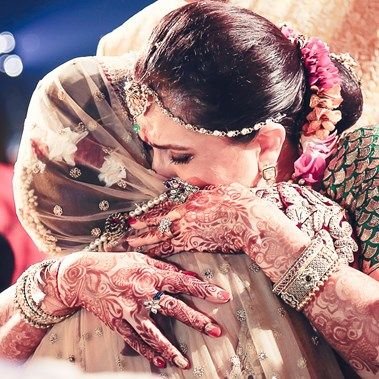
It’s now time for the lovely Gujarati bride to depart from her father’s house and start a new life with her spouse. The bride, her parents, her siblings, and other close friends and family members can’t help but cry during this poignant moment at the Gujarati wedding. The bride thanks her mother for everything her parents have done for her by placing some rice on her pallu.
3. Ghar Nu Lakshmi

The in-laws of a Gujarati bride warmly welcome her as the goddess Lakshmi who will bring riches and luck into the home. The bride is expected to softly knock down the kalash with her right foot when she enters the house in order to gently knock down the kalash full of rice that has been put on the threshold of the main door. The bride is then given an aarti and has a tika placed on her forehead by her mother-in-law.
4. Aeki Beki
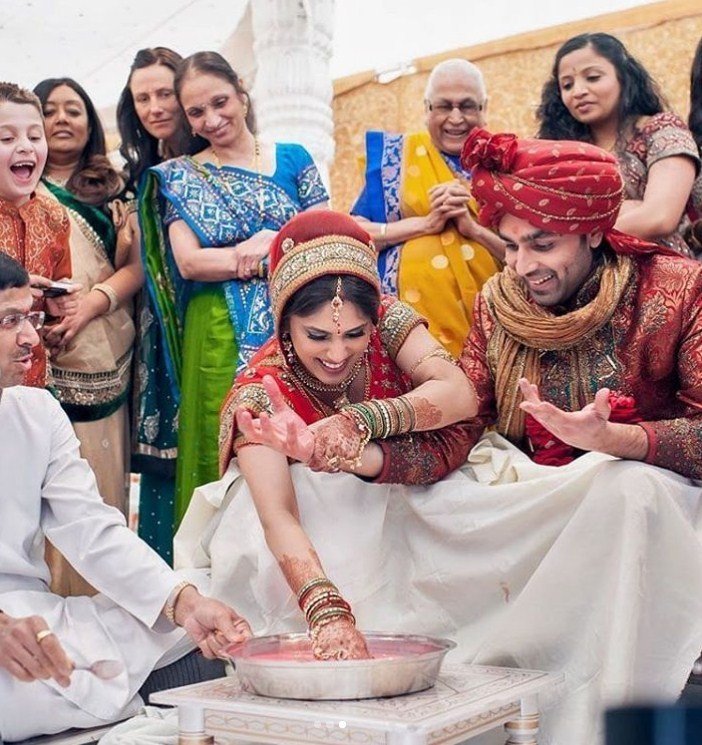
The pair is asked to participate in this enjoyable activity. There is a mixture of milk and vermillion in a circular tray. The tray is filled with some coins and a ring. The liquid’s opaque milky pink hue makes it impossible to see the ring. The pair is instructed to dip their fingers into the liquid and search for the ring. There are four rounds in the game. The person who finds it first for the most turns is regarded as the head of the household.