selectvenue
 Long-lasting feasts and celebrations are woven into India’s social and cultural fabric. The Ganesha Chaturthi event, which commemorates the birth of the elephant-headed god Ganesha, is one of the numerous religious and social rituals that distinguish the varied festive calendar of Indians. One of the most significant Hindu holidays, Ganesh Chaturthi, commemorates the birth of Lord Ganesha, the god of wisdom and wealth.

Vinayak Chaturthi is another name for this celebration. To fulfil their aspirations and to solve their difficulties, people worship Lord Ganesha and ask for his heavenly blessings. Particularly in the states of Maharashtra, Tamil Nadu, Andhra Pradesh, and Karnataka, it is celebrated with great fervour.
When it is celebrated?

This auspicious occasion is observed according to the Hindu calendar in Bhadrapada month, which corresponds to August or September on the Gregorian calendar. Ten days of revelry and meeting come to a conclusion on “Anant Chaturdasi,” the fourteenth day of the waxing moon phase.
Mythology and History
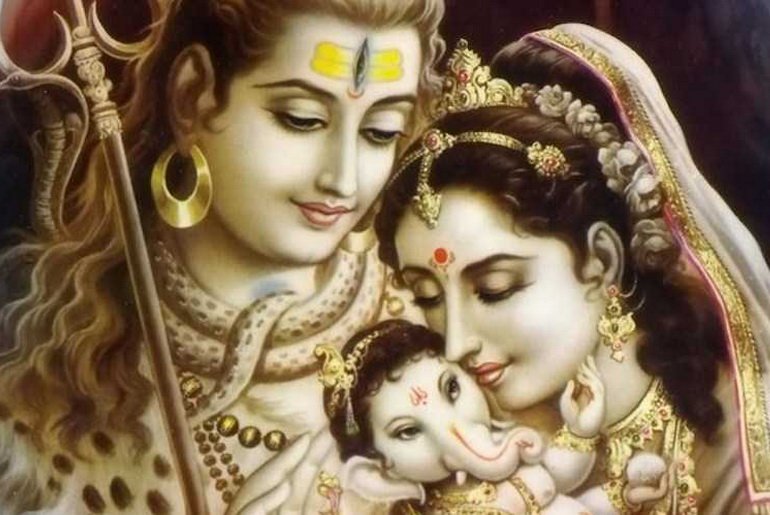
The frequently recounted tale that we have been listening dates back to the reign of Lord Shiva and Goddess Parvati. Parvati made Ganesha out of sandalwood paste to guard her bathroom door as she was bathing. Lord Shiva became infuriated when he arrived and Ganesha insisted on keeping him from leaving, so he beheaded the Ganesha. In accordance with Goddess Parvati’s instructions, Lord Shiva searched for a child’s head, but all he found was an elephant head. As a result, Lord Ganesha, the manifestation of an elephant-headed Lord, was born. It is the birthday of Ganesha. One of Ganesha’s 108 names, Vighnaharta, made an earthly appearance to help followers overcome their challenges. In Hinduism, he is invoked before every puja and prayer. He rules over beginnings.

On Ganesh Chaturthi, it is customary to avoid looking at the moon at certain times since it is thought that doing so may bring curses and accusations of stealing. The story of Lord Krishna, who was wrongly accused of stealing a priceless diamond, is where the myth started. Sage Narada put out the theory that Lord Krishna was cursed as a result of seeing the moon on Bhadrapada Shukla Chaturthi, the day Ganesh Chaturthi falls on.
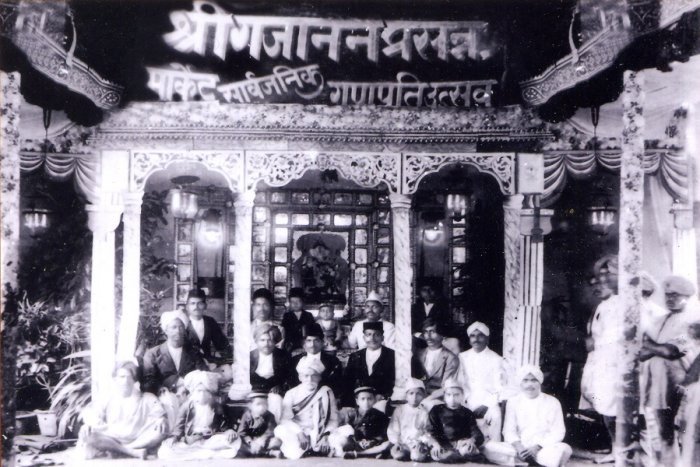
The earliest celebration of Ganesh Chaturthi was during the reign of the legendary Maratha king Chatrapati Shivaji Maharaja. Since Lord Ganesha was the Peshwas’ local deity, they continued to celebrate the festival. However, after the Peshwas’ rule ended, Bal Gangadhar Tilak, also known as Lokmanya Tilak, an accomplished freedom warrior, nationalist, and social reformer, brought the event back to life. Since Tilak was a visionary, he chose to close the gaps after observing that the celebration was more popular among the elite classes of society. In an effort to bring all of the country’s residents together, he strove to eliminate the divisions between Brahmins and Non-Brahmins, realising the significance of Lord Ganesha to the nation. He established the custom of Ganesh’s idol immersion on the tenth day and was the first to install big public images of Ganesha in pavilions. By making the festival open to the public, he created a space where everyone, regardless of caste, creed, or sexual orientation, could interact and band together to form the cornerstone of the independence struggle.
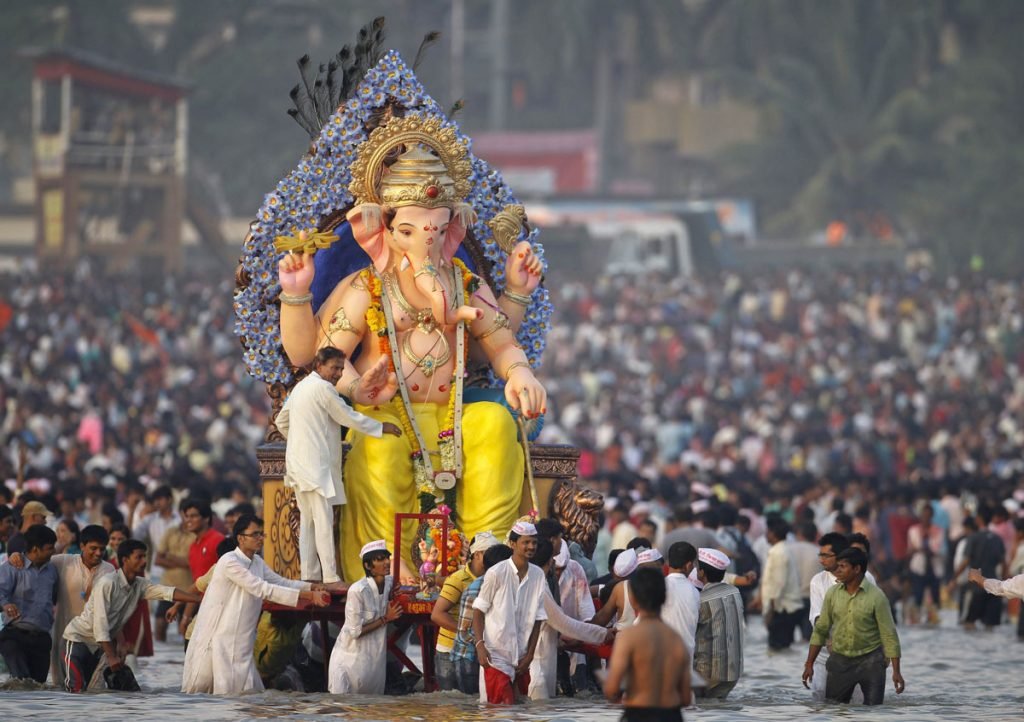
Celebration
Months before the solemn holiday, preparations start. The celebrations run for almost ten days. In the shape of stunning clay idols, Ganesha or Ganpati is welcomed inside residences and enormous pandals.
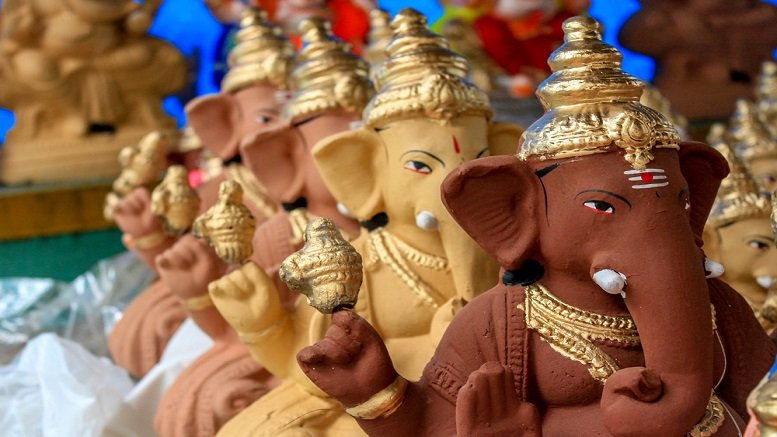
On the first day of the Ganesh Chaturthi celebrations, specially constructed temporary buildings called Mandapas or Pandals are erected, and the lovely statues are set on them in homes, communities, and temples. The temple priest, dressed in a red silk dhoti, performs the “Pranapratishtha” procedures, which involve chanting mantras to infuse the vitality of the Lord into the idol. The Shhodashopachara, which consists of 16 separate prayer offerings, follows this. The statue is covered in red and sandal paste, and numerous offerings, including modaks, durva grass blades, coconut, and red flowers, are made. The Rig Veda, the Ganapati Atharvashirsa, the Upanishad, and the Ganesha stotra from the Narada Purana are among the Vedic hymns performed throughout the event.
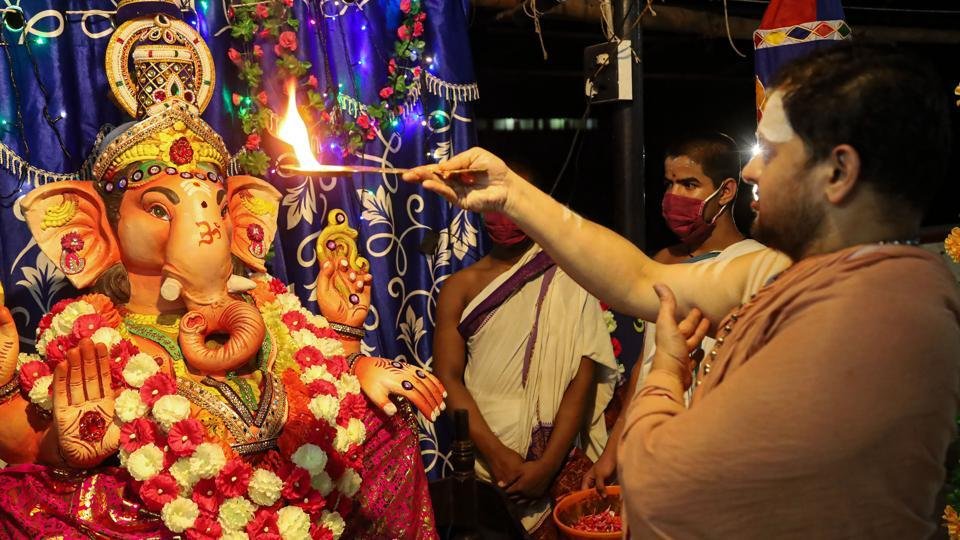
An evening aarti with songs and hymns is organised by individual houses at this time of devotion and prayer. Women create stunning rangolis outside their homes while decked out in their finest saris and jewellery. Family get-together, as well as visits to friends, neighbours, and family, take place throughout this period. Mumbai is home to a number of pandals, each of which competes against the others by erecting larger and more impressive idols; prizes are also awarded to the best pandal. Various cultural events are organized. Folk songs and dance are performed by the local artisans to celebrate the festival.
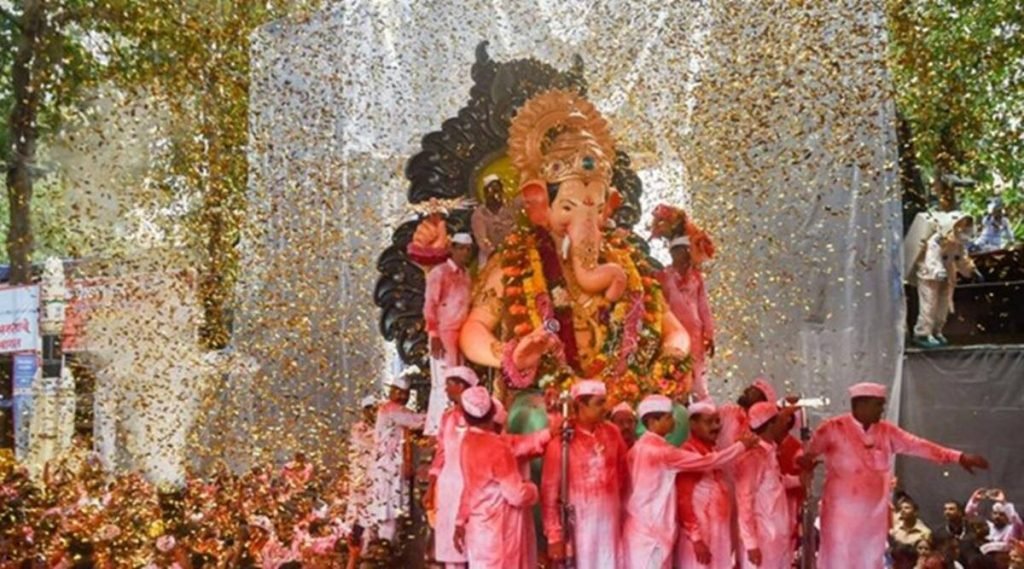
Immersion of the Idol
The day of Anant Chaturdashi is when the idol is immersed. While Chaturdashi signifies fourteenth, the word Anant means unlimited, eternal, or immortal energy. As a result, it occurs on the 14th day of the Hindu calendar’s Bhadrapada month, which is also the day on which Lord Ananta, an incarnation of Lord Vishnu, birth is worshipped.

Immersion of the idol has a belief associated with it; Hindus hold to the idea that the world is constantly changing and that what is present today in one form or another will be formless tomorrow. Thus, the idea of immersion serves as a reminder of this idea.
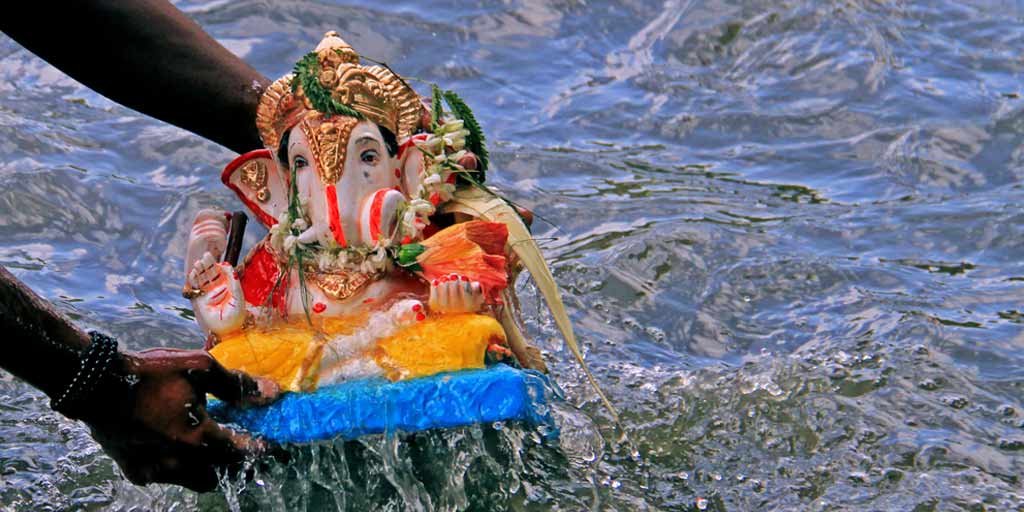
It is a lavish event – immersion ritual, where worshippers parade the idol through the crowd while dancing to the beat of the dhol. Before submerging the idol in a body of water like a lake or sea, devotees perform a last aarti and hurl gulal at one another. Devotees chant, “Ganapathi Bappa Morya, Purchya Varshi Laukariya” (O father Ganesha, come again early next year). People transport the idol to the river to be submerged after making the final offering of coconuts, flowers, and camphor.