selectvenue
 India has a wide variety of cultures, communities, and traditions. We are divided by traditions yet brought together by wedding antics, and that is what makes India so beautiful. Marathi weddings, or more typically Maharashtrian weddings, are great examples of straightforward but distinctive wedding rituals where cultural traditions are embraced wholeheartedly. The majority of Indian weddings are incredibly lavish affairs full of beauty. However, Maharashtrian weddings are remarkable because they make it quite easy to bring joy into your life. A Marathi wedding is a fairly straightforward and colourful ritual. The Marathi wedding rites and customs are all about enjoying yourself and celebrating love.
Planning a Marathi wedding means that you must be aware of all the rituals that are necessary for the celebration. Every ritual should probably be documented so that you aren’t caught off guard by anything being missed or performed improperly. Similar to this, you should be aware of the rationale behind and specifics of each Marathi wedding custom.
Here is a list of Marathi wedding customs to aid you in celebrating this regal cultural event even more successfully.
Pre-Wedding Rituals
1. Lagnacha Bedior
In a Marathi wedding, this is the very first action. The bride and groom’s horoscopes, or “Patrikas,” are matched during this ceremony. When all weddings were planned by the parents of the bride and groom, this was a crucial tradition. The family priests then match the boy and girl’s horoscopes, or patrikas, and decide on an auspicious time and date for the couple to get married.
2. Sakhar Puda

The first pre-wedding event at a Marathi wedding is called the Sakhar Puda. In a Maharashtrian wedding, it is the formal engagement ceremony, or the Roka ceremony. In this ritual, the mother of the groom blesses the bride by applying Haldi-Kumkum to her forehead and gives her a saree, jewellery, and Sakhar Puda, or sweets. The engagement rings are then formally exchanged by the pair. Typically, the Sakhar Puda is held a few days before the wedding.
3. Muhurt Karane
The pre-wedding traditions begin in earnest when the Sakhar Puda is observed and the Maharashtrian wedding’s vidhi is determined. Months before the big day, the preparations begin! The mother of the bride extends an invitation to five married women, collectively known as the “Suhasanies,” to visit on a lucky day. Together, they roll papads, crush spices and pulses in an iron pestle for later use, and prepare turmeric. The ‘rukhvat’ ceremony, in which the bridal trousseau, utensils, sweets, and other items are all attractively exhibited, is held after the ceremonies are followed by shopping.
4. Kelvan

The families of the bride and groom set aside a fortunate period during this Maharashtrian wedding custom to make their prayers to their respective family deities. In essence, this is done to ask the Almighty for benefits. Two to three days prior to the wedding, the rite is carried out. Following the procedure, a large feast is planned for all of the visitors.
5. Halad Chadavane
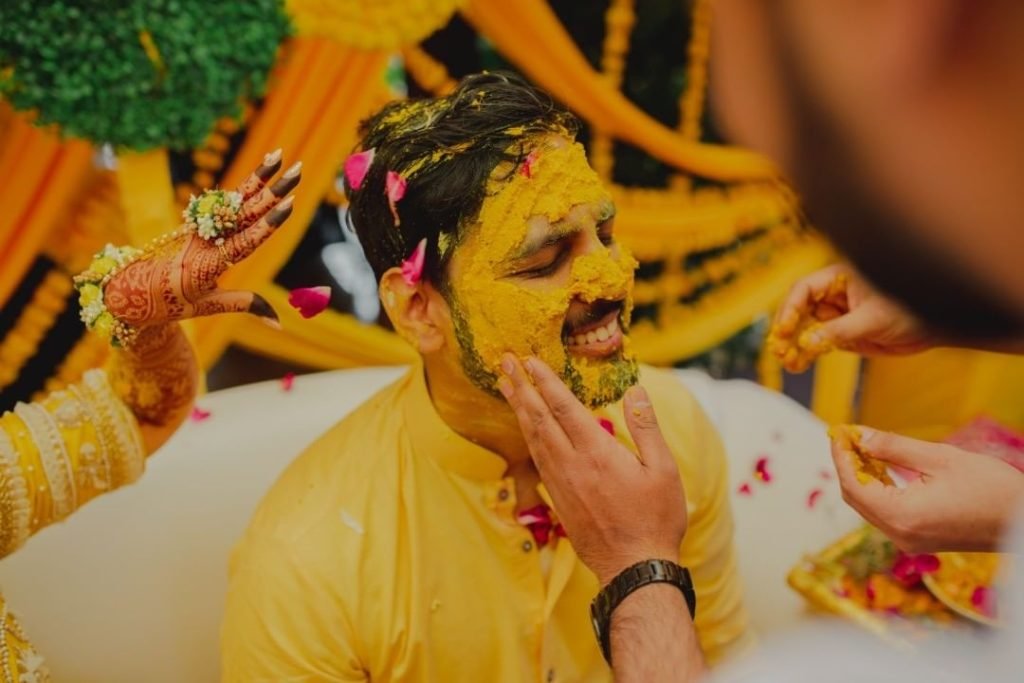
The Maharashtrian equivalent of the Haldi ritual is called Halad Chadavane. It is a pre-marriage custom performed at both the bride and groom’s homes. The bride and groom are covered in Haldi, or turmeric paste, during this Marathi wedding ceremony. A very well-known Indian custom that is thought to have healing properties and give the skin a healthy glow is applying haldi.
Wedding Rituals
1. Chura Ceremony
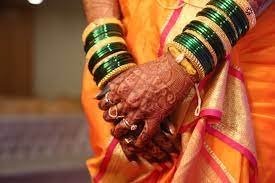
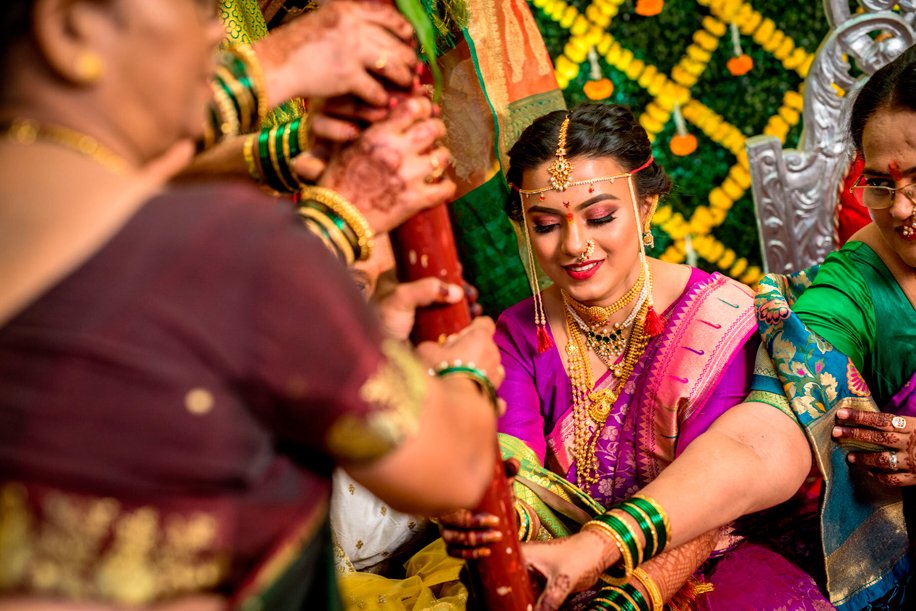
The bride receives a set of green glass bangles, as well as gold or pearl ones, at the “chura” ritual. Green is viewed as a symbol of life, creation, and fertility in Maharashtrian culture. It is seen to be a lucky colour that symbolises the desire for a happy life for a newlywed couple.
2. Punyavchan

The goal of the Ganpati Pooja is to grant the couple a future without difficulties. The family god, known as the Kuldevta, is then prayed to in the mandap one more to bless the pair. Once at the wedding location, the bride’s parents ask the guests to bless their daughter at the Punyavachan.
3. Seemant Puja and Gaurihar Puja
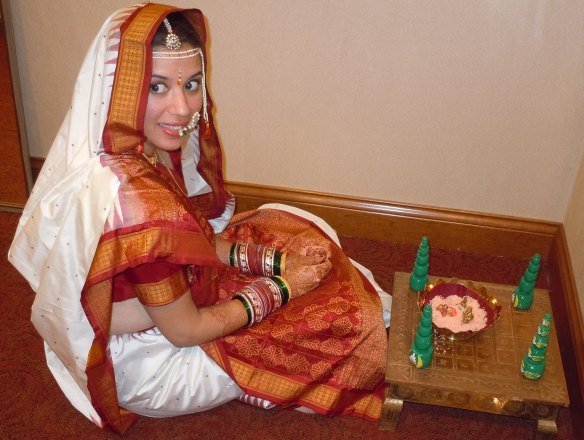
The bride’s mother welcomes the groom with Aarti and treats during Seemanpuja. The bride’s mother welcomes the groom into the wedding location by washing his feet, donning a tilak on his forehead, and performing an aarti. The Gurihar Pooja then takes place. The bride prays to and asks the blessings of Goddess Parvati for a good life while wearing a beautiful Paithani saree or silk shalu, gold jewellery, and flowers in her hair. The bride’s maternal uncle gives her some wealth during the same pooja, which she subsequently offers to Goddess Parvati.
4. Antarpat
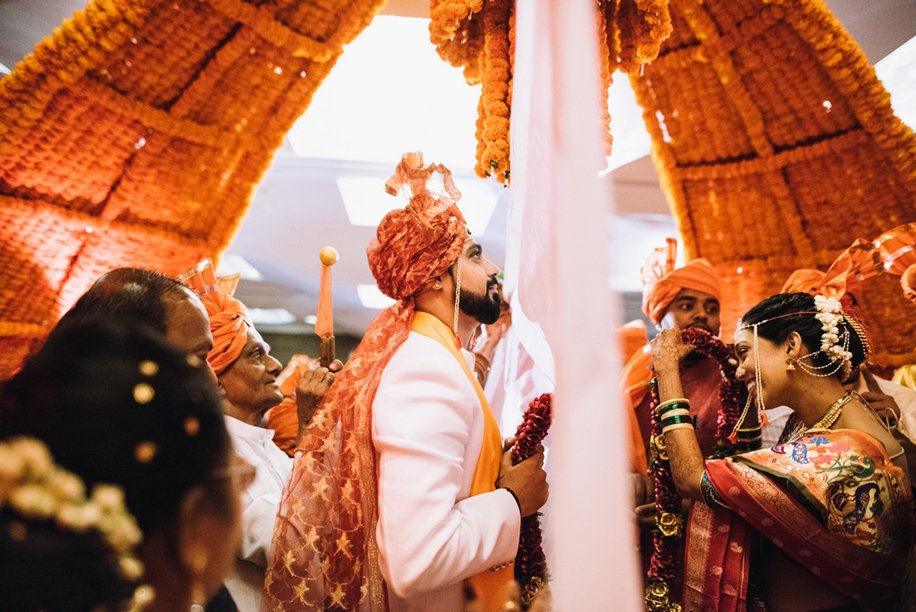
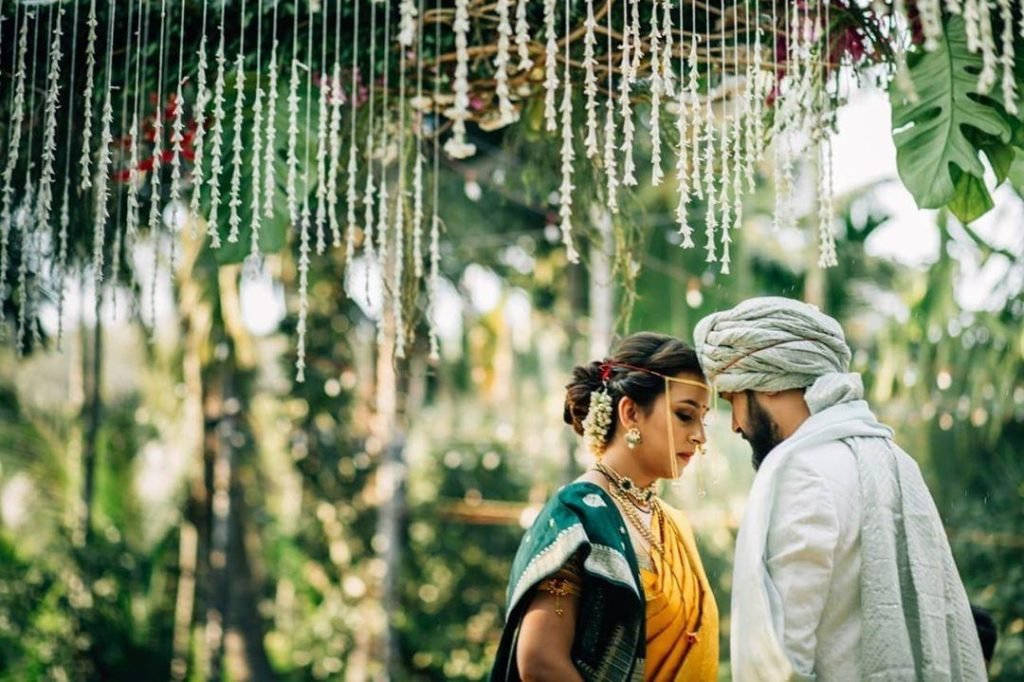
The bride and groom aren’t intended to see one other during this wedding tradition. They are separated from one another by a silk scarf to obstruct their visions and prevent them from seeing one another. Only then can they look at each other when the priest has finished reciting the sacred mantras.
5. Sankalp

The Sankalp ceremony in a Marathi wedding is comparable to the Jaimala ceremony, in which the bride and groom trade garlands. The couple is free to select the flowers of their choice. After exchanging garlands, the couple is showered with flowers and rice by their friends and relatives. This symbolises that the couple’s entire family has recognised them as husband and wife.
6. Kanyadaan
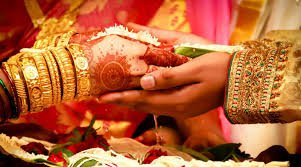
In this custom, the bride’s father gives the groom her hand in marriage. It represents that he has blessed the groom and will now be responsible for taking care of her. The bride is then covered in sindoor, and the groom fastens the Mangalsutra around her neck. In exchange, the bride gives the husband a forehead application of Chandan teeka.
7. Saptapadi

The final ceremony in Maharashtrian weddings is this one. They begin walking around the sacred fire seven times as a couple when the groom ties the Mangalsutra around the bride’s neck. The bride is required to touch the betel nuts put on the venue with her foot as she walks. The bride places her foot on a grindstone as the groom clutches her hand after the rounds are complete. This gesture shows that her husband will provide for her forever.
8. Varat

Varat essentially refers to the bride’s departure from her parents’ home and entry into her husband’s home in a Marathi wedding. The groom also holds the Gaurihar Puja’s Parvati statue as the bride says her goodbyes. The bride typically travels in a sizable procession to her in-laws’ residence.