selectvenue
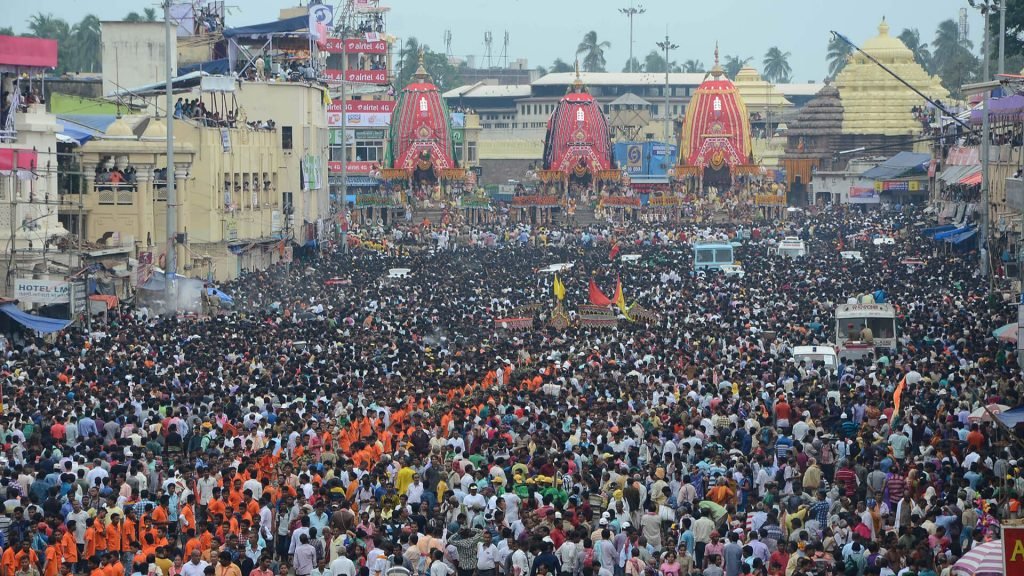
 The well-known Jagannath Puri Rath Yatra, commonly referred to as the Festival of Chariots, is thought to be the world’s oldest and largest chariot procession. Every year, the Jagannath Rath Yatra is celebrated with pomp and show. The Jagannath Puri Rath Yatra attracts participants from all around the world. In the sacred city of Puri in the Indian state of Orissa, a celebrated chariot festival honouring Lord Jagannath (a manifestation of Lord Vishnu) takes place every year. This is a ten day long festivity starting on the ‘Ashadha Shukla Dwitiya’ of the Hindu month, ‘Ashadha’. Ratha Yatra is also known as Navadina Yatra, Dasavatara Yatra, and Gundicha Yatra. Apart from Puri, the auspicious Rath Yatra is also observed in various other cities with much pomp and fervour.

Rath Yatra history
Folklore holds that during the “Dwapar Yug,” Krishna, also known as “Jagannath,” was Lord Vishnu’s earthly manifestation in human form. Another name for Krishna is Jagannath, which translates to “the preserver of the universe” and implies “the master of the world.” The Lord Jagannath, his older brother “Balabhadra,” and his younger sister “Subhadra” are the three main deities in the Jagannath temple.
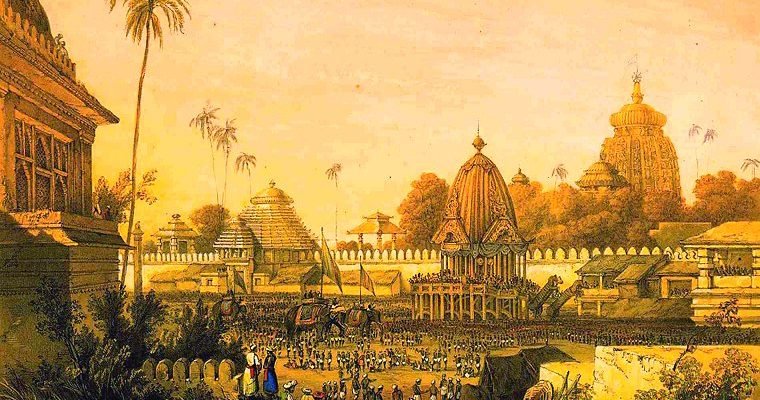
The genesis of the Rath Yatra is the subject of numerous myths. According to a tale, King Indradyumna’s wife, Queen Gundicha, who was responsible for the construction of the Jagannath temple at Puri, made a vow to Lord Jagannath that he would return annually with his siblings Subhadra and Balabhadra to the Gundicha shrine. According to legend, Lord Vishwkarma carved the current statues of Lord Jagannath, Lord Balabhadra, and goddess Subhadra at the temple, known as Gundicha temple, from a wood log. The process took several months, and as Lord Vishwakarma was finishing the god sculptures, Queen Gundicha unlocked the temple door and Lord Vishwakarma vanished, leaving the statues unfinished.
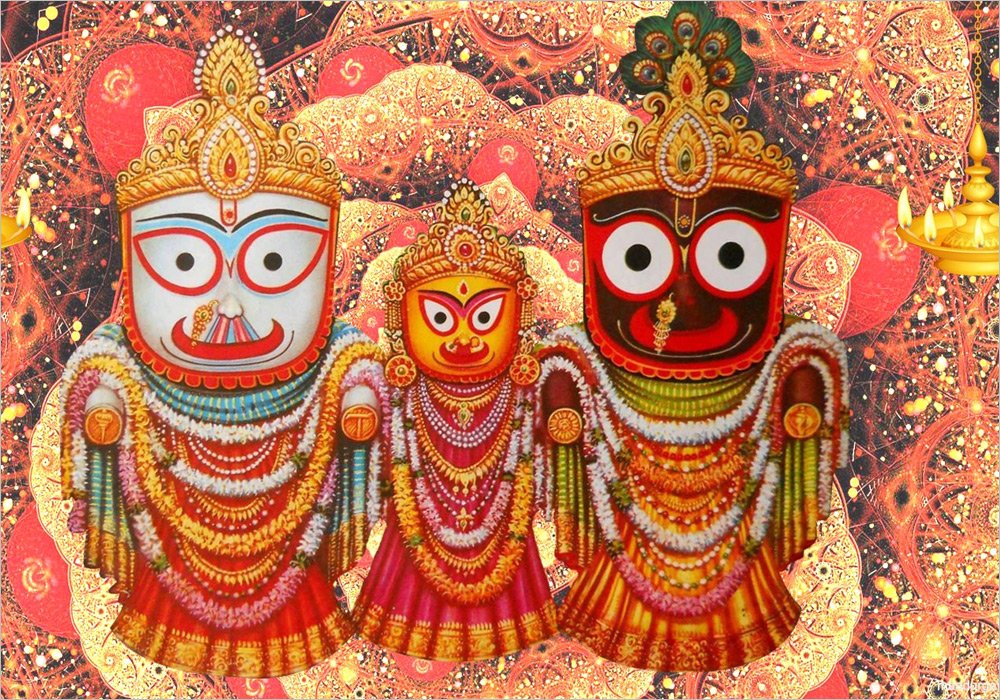
Since that time, it is thought that Lord Jagannath and his siblings only leave the temple once a year to go to their birthplaces, as promised to queen Gundicha. The current Gundicha temple bears the queen’s name. About 3 miles separate the main temple from the Gundicha temple.
The deities spend eight days at the Gundicha temple before beginning the Bahuda Yatra, or return journey, on the ninth day. The day the three Puri Shri Mandir presiding deities enter the temple following the Bahuda Yatra is referred to as Niladri Bije. The Rath Yatra event comes to a close with Niladri Bije.
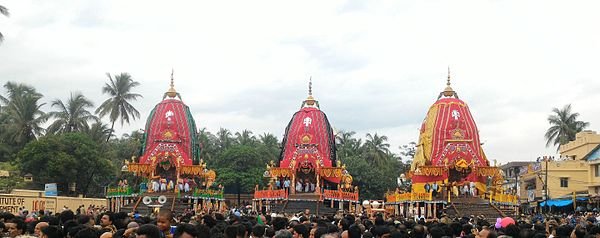
The chariot of Lord Jagannath is called, ‘Nandigosha’ or ‘Garuddhwaja’, the chariot of ‘Balabhadra’ is named as ‘Taladhwaja’ or ‘Langaladhwaja’ and the chariot of ‘Subhadra’ is called ‘Devadalna’ or ‘Padmadhwaja’. The goddess is accompanied by ‘Sudarshana Chakra’ or the sacred wheel. The chariot of Goddess Subhadra remains in between the two chariots and the Arjuna becomes the charioteer (Sarathi) of the chariot. The three chariots are decorated with different styles same as centuries old tradition.
Significance
In Hindu mythology, deities, once stationed, are not removed from their position. The Jagannath Yatra is the only festival whose rituals allow Hindu deities to travel from the Jagannath Temple to Gundicha Temple, where they stay for a couple of days.

Puri’s Rath Yatra symbolizes fraternity, peace, and harmony. Lakhs of devotees gather in Puri to pull the magnificent chariots. It’s believed that Lord Jagannath, the Lord of the Universe, comes out of the temple only once in a year for his devotees, those who can’t enter the temple. For people seeking ‘moksha’, the Rath Yatra holds enormous significance. It is believed anyone, who draws or touches the rope connected to the deities’ chariots, or even gets a glimpse of the idols on the chariot will attain salvation. And it is also believed that touching the rope of Lord Jagannath’ chariot will cleanse all the sins committed, knowingly or unknowingly.
Rituals
The ceremonies for the festival begin around 18 days before the day of the Rath Yatra. Ratha Yatra as the long journey of life toward Moksha.

Before the “Rath Yatra,” worshippers take a bath in the “Brahma-muhurta,” representing the purification of their body and spirit. Before leaving their houses to join the procession, devotees offer prayers to their personal Lord Jagannath statues. The chariots are assembled in the temple grounds after being prepared for the event with special wood from trees like “Phassi” and “Dhausa.” A group of carpenters typically purchases the newly built chariots from “Dasapalla” each year. During the initiation, devotees throng the location.

Then, when “Jai Jagannath” is chanted, the “King of Puri” transfers the idols from the temples to the three chariots. The king’s children then ride in on elephants and use a golden broom to clean the chariots’ platforms. The floors are then sprayed with scented water. The idols are brought out at this festival, by either “The King of Puri” or “The King of Nepal,” both of which are members of the “Chandravanshi Dynasty of Lord Krishna.” After being transported to “Gundicha Temple,” the deities dwell there for nine days before returning to “Shri Mandir.”
The Chariot
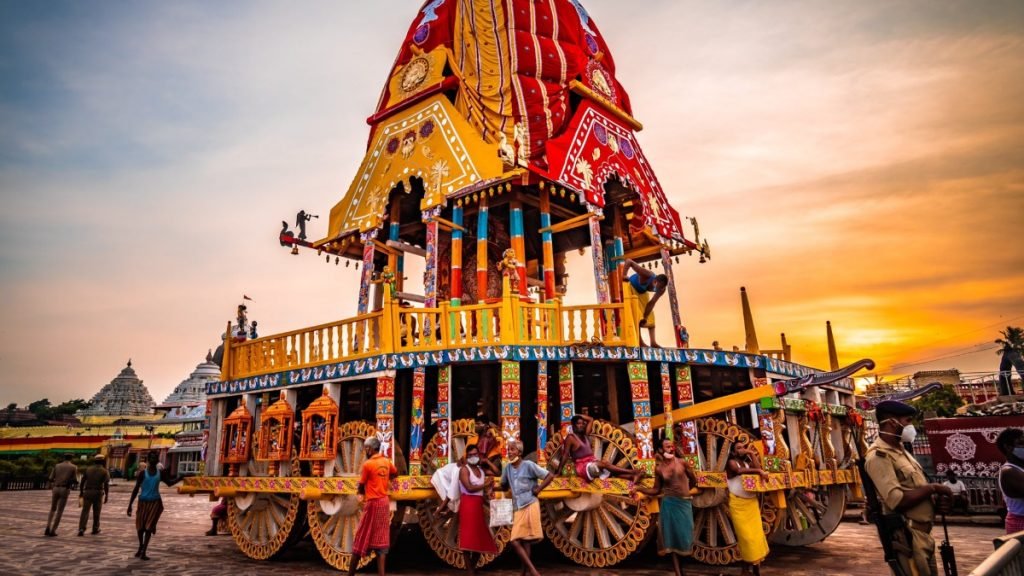
The chariot used in the Rath Yatra is composed of Neem tree wood. It is eventually deconstructed and used as firewood in the temple kitchen. Lord Jagannath’s primary chariot, or rath, is 44 feet tall; Balbhadra’s chariot is 43 feet tall, and Subhadra’s chariot is 42 feet tall.