 selectvenue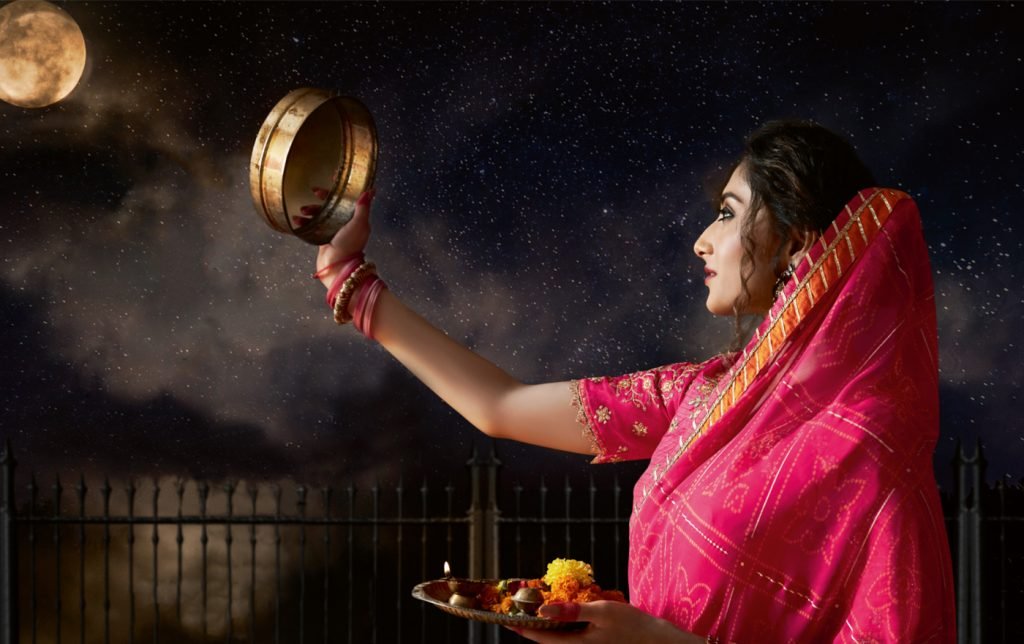
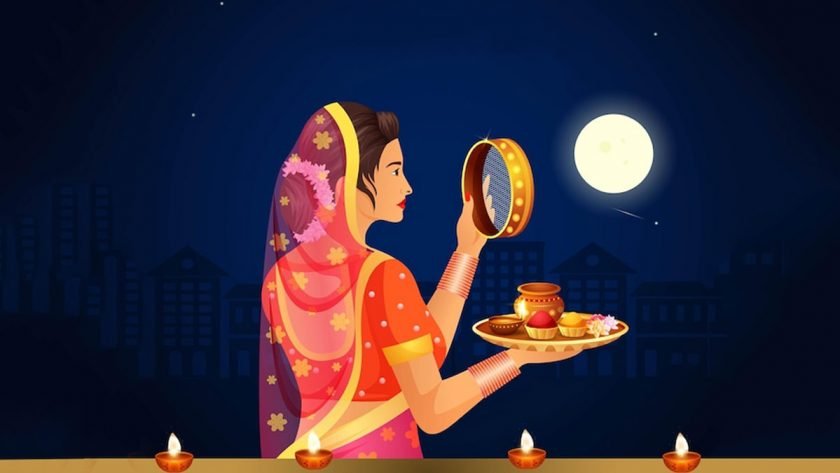
India is a country of festivals and rituals. From north to south, east to west there are a number of festivals. One of the major and significant festivals celebrated in the northern part of the country is Karva Chauth. Married, Hindu and Sikh women celebrate Karva Chauth by fasting for the long lives of their husbands. The idea behind celebrating the festival is to pray and wish for the well-being, prosperity, longevity of their husband. It is a celebration of love, marriage and the unbreakable bond shared between a husband and wife. Karva Chauth is celebrated with great zeal and enthusiasm. Also known as Niraja Vrat, it is a one-day festival celebrated annually by married Hindu women in which they observe a fast from sunrise to moonrise and pray for the well-being and longevity of their husbands. The festival is also observed by unmarried women who pray in the hope of securing a desired life partner. It falls on the fourth day of the dark fortnight (Krishna paksha or the waning phase of the moon) in the month of Kartik of the Hindu lunar calendar. The date roughly falls anytime between mid to late October. It is mainly celebrated in the states of Northern India such as Punjab, Haryana, Himachal Pradesh, Uttar Pradesh and Rajasthan.
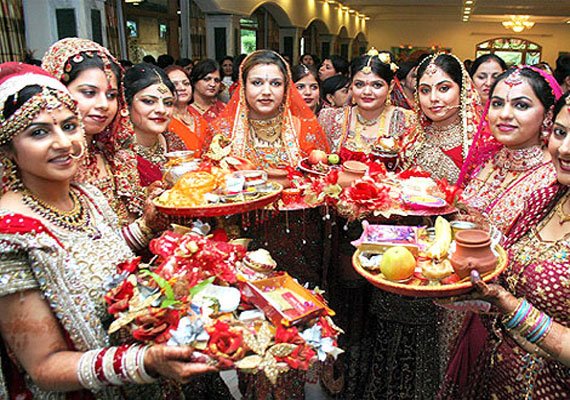
If we talk about the literal meaning of Karwa Chauth, it means offering ‘Argya’ to the moon using an earthen pot. The word Karva Chauth is made up of two words, ‘Karva,’ which means an earthen pot with a spout and ‘Chauth’ which means fourth. The earthen pot is of great significance as it is used by the women to offer water to the moon as part of the festival rituals. It is said that this festival began when women started praying for the safe return of their husbands who went to fight wars in far off lands. It is also held to mark the end of the harvest season. Whatever be the origins, the festival offers an occasion to strengthen familial ties.
Apart from observing fasts, women also pray for a prosperous and happy married life. Later in the evening, they perform puja for their husbands before the moon sighting.
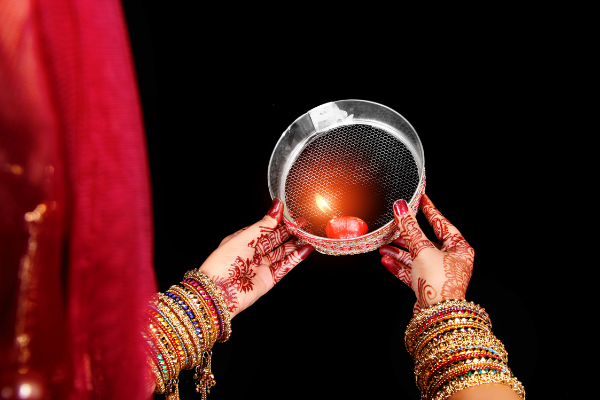
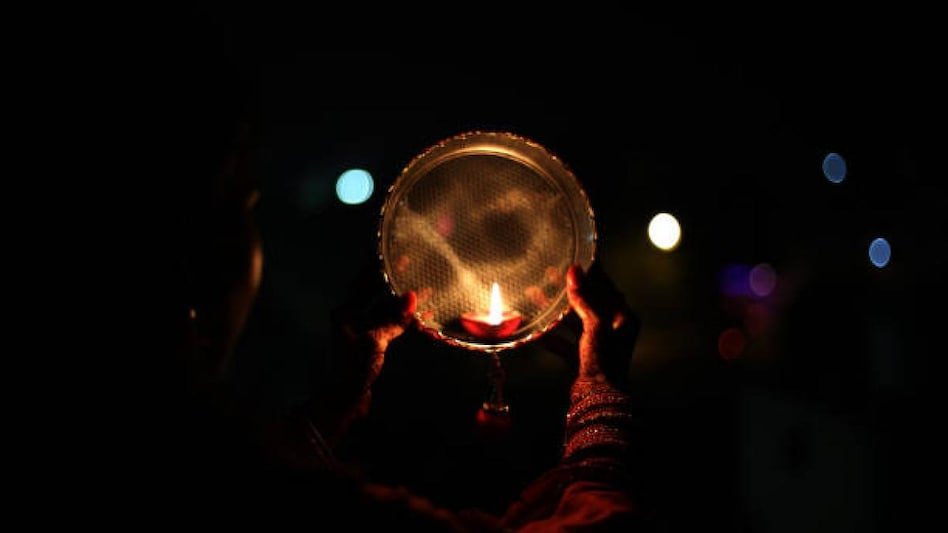
After this, the women try to see the moon through a sieve and then catch a glimpse of their husbands through the same sieve. It is also believed that when a wife looks at her husband through a sieve, all negative emotions are filtered through it.
There are various mythological tales related to Karva Chauth. One of the most popular ones is related to Savitri and Satyavan in which the former brought back her husband from the clutches of death with her prayer and determination. Another such story is that of Veervati, the only sister of seven loving brothers. When the brothers could not bear to see her fasting the whole day they misled her into believing that the moon had risen. Veervati broke her fast and had food but soon got the news of her husband’s death. She prayed for a whole year and the Gods pleased with her devotion gave back her husband’s life.
The tradition of applying Mehendi or henna is a main and important part of Karwa Chauth. In the Hindu culture, Mehendi is a symbol of good fortune for married women. Women apply Mehndi on their hand and feet on his special day of Karwa Chauth. Sargi is considered as a main part of Karwa Chauth. It is main meal prepared by mother-in-law for her daughter-in-law and it is to be eaten before keeping the fast i.e. before sunrise.

The Karva Chauth is a celebration of the beautiful bond between a husband and wife celebrating love and togetherness. Today Karva Chauth has become an occasion rather than a prayer.