
 selectvenue
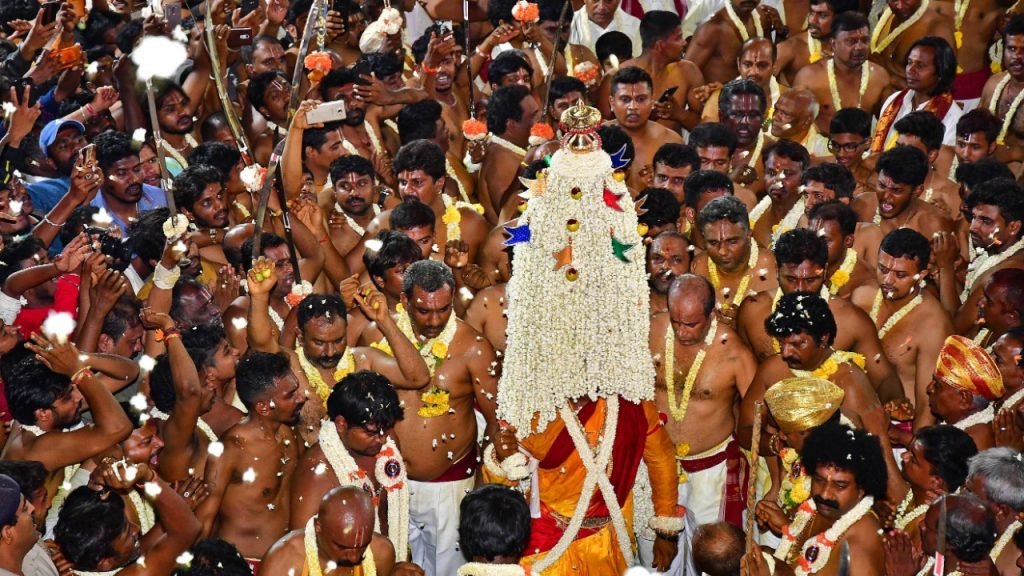
 The Karaga festival or Karaga jatre is celebrated annually in the Chaitra month of the Hindu calendar in the south Indian state of Karnataka, mainly by the Tigala community; though, today it is attended by people from all sects. The Tigalas consider themselves descendants of the epic heroine Draupadi, and are traditionally urban gardeners, horticulturists and lake settlers. There are three main sub-groups within the Tigalas—Vahnikula Kshatriyas, Shambukula Kshatriyas and Agnikula Kshatriyas. The Vahnikulas follow the lunar calendar, hence their Karaga festivities take place after moonrise and before sunrise while the Shambukulas and Agnikulas follow the solar calendar and their festivals are celebrated during daytime.
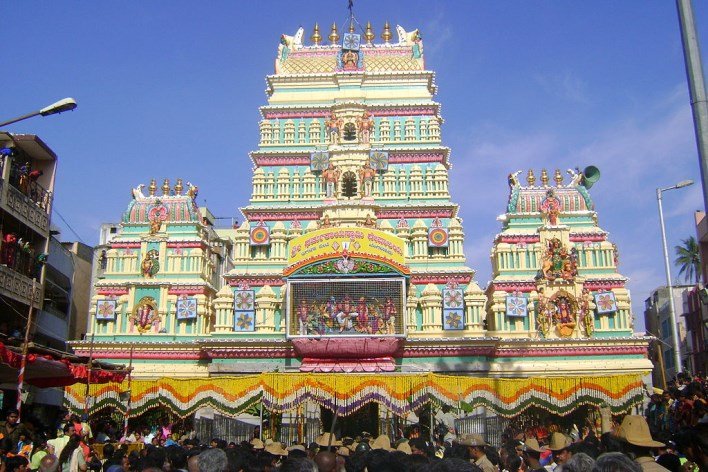
One of the four temples in the city dedicated to Draupadi and Pandavas, the Dharmaraya Swamy temple (locally known as Dodda Dharmaraja devastana) in Tigalarapete is the principal ritual centre of the Karaga festival. The other three temples—Chikka Dharmaraja temple and Dharmaraja and Panchali temple at Kalasipalya, and Ekambareshwara Dharmaraja temple at Shivajinagar—also have Karaga festivals in honour of the presiding deities, but the Pete (old/market town) Karaga, also known as Bengaluru Karaga, is considered the primary civic ritual of the city. The Dharmaraya Swamy temple is believed to have been built between the eighteenth and nineteenth centuries, but Karaga seems to have been celebrated since much before.

The basic folklore associated with the origin of Karaga festival is derived from Mahabharata and has numerous variations. The most common legend is around the demon Timarasura. The Pandavas, Krishna and Draupadi were on their way to heaven after completing their exile in the forest when Timarasura called out to Draupadi and teased her. Since her husbands and Krishna were ahead of her, she was left alone to fight the demon.
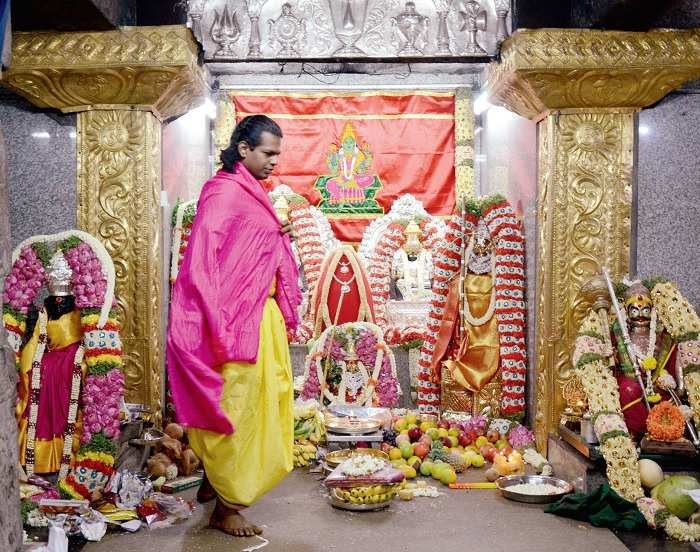
Timarasura was armed with a boon from Lord Shiva that even from a single droplet of his blood that fell in a battle, would arise thousands of Timarasuras. Draupadi assumed her primeval form of Adi Shakti, and when she shook the cloth covering her breast, warriors like Durga pujari, gante pujari (bell priest), ganachari and veerakumaras (hero protectors of the Goddess) sprang from it. The battle was terrible and long; as the Goddess struck the asura, his blood flowed and more asuras emerged. Eventually, the Goddess struck one final blow and licked clean the flowing blood and swallowed the demon. The Goddess then regained her original form of Draupadi and promised to visit her warrior sons once every year.

The first day of the festivities is initiated by the hoisting of flag on sapthami (seventh day) of the Chaitra month. The yellow coloured dharma dwaja (flag of morality) is brought from the Potharaja household and is tied to a bamboo pole brought by Vahnikula Kshatriyas of Jaraganahalli forest. During the five days between the second to the seventh day of the Karaga festival, the group of priests led by the Karaga priest visit temples, waterbodies, and three gardai manes in nine directions across the city to cleanse them to receive the Goddess. Hasi karaga (birth of the Karaga), performed on the night of the seventh day, is the most significant ritual of the Karaga festival. It is conducted after sundown at the Hasi Karaga mandapa with thousands of devotees gathered to witness the manifestation of the Goddess in the karaga.
On the last day of the Karaga festival, everyone from the Tigala community participates in vasantotsava (spring festival), an event where men are challenged to break coconuts tied from a wooden frame while turmeric water is splashed on them. The festivities come to an end with the lowering of the flag and once all the rituals are completed, the Karaga priest returns to his family where he is remarried to his wife.


