 selectvenue
 The season of festivals for Hindus commences with the famous Dussehra, also known as Durga Puja and Vijayadashami. Dussehra, Vijaya Dashami or Dashain is a perfect excuse to celebrate your fondness for festivity, tradition, and culture and love for various cuisines. It’s one of the festivals that is celebrated across the country in a grand manner, but in different ways.
WHY IS DUSSEHRA CELEBRATED?
Dussehra festival marks the triumph of truth and love, over evil and hatred.
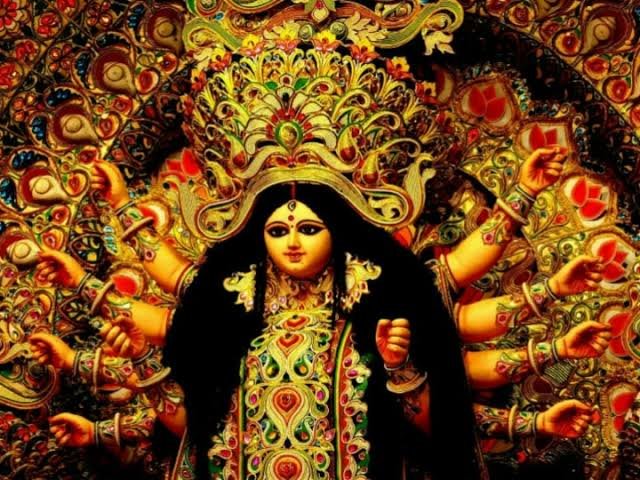
In some of the eastern, northeastern, and southern states of the country, the festival is celebrated as Vijaya Dashami. It commemorates the day when Goddess Durga defeated and slayed the demon Mahishasura in an intense battle that lasted for nine days and ended on the tenth day.
It also marks the culmination of the Navratri and Durga Puja festivals. During Navratri, nine forms of Devi/Shakti (Hindu Goddess) are worshipped all around the country with different rituals.
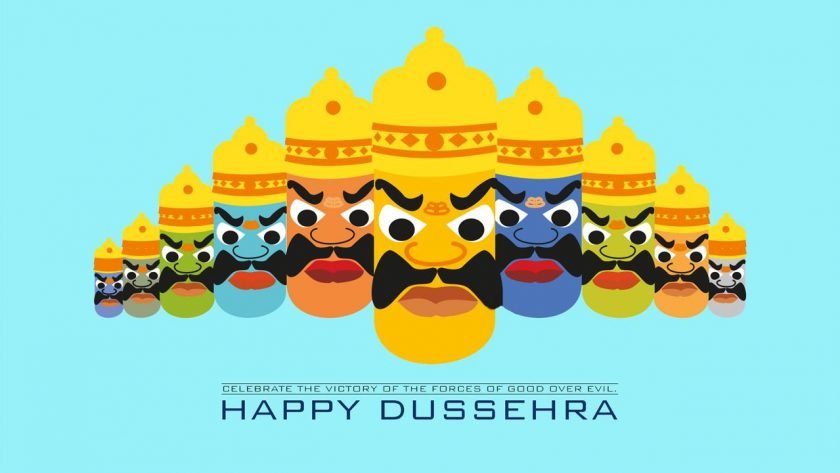
In some regions,the festival is observed as Dussehra, Dashahara or Dasara. It marks the day when Lord Rama killed Ravana, the ten-headed demon king of Lanka.
WHEN IS DUSSHERA CELEBRATED?
Dussehra is celebrated on the 10th day of the month of Ashvin(September–October), the seventh month of the Hindu calendar, with the appearance of the full moon, an event called the “bright fortnight” (shukla paksha). For many, it marks the beginning of preparation for Diwali, which occurs 20 days after Dussehra.
HOW IS DUSSEHRA CELEBRATED?
The season of festivals commences with the famous Dussehra, also known as Durga Puja and Vijayadashami.
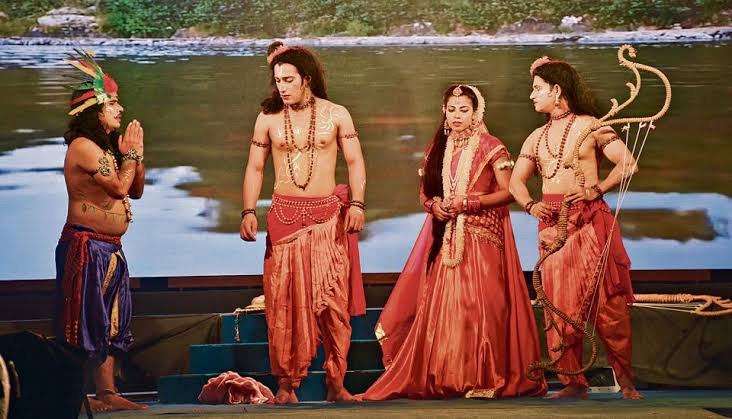
In the northern, western and central parts of India, Dussehra celebration takes place over a period of 10 days. People organise dance and drama skits that are based on the Ramayana. These skits and plays are popular all over the world and are known as RamLeela.
In the eastern and southern states of India nine days of Navratri are dedicated to different forms of Goddess Durga, the tenth day i.e. the day of Durga Puja or Dussehra is an emotional one for devotees. On this day, idols of Goddess Durga are immersed in rivers, oceans or other water bodies.
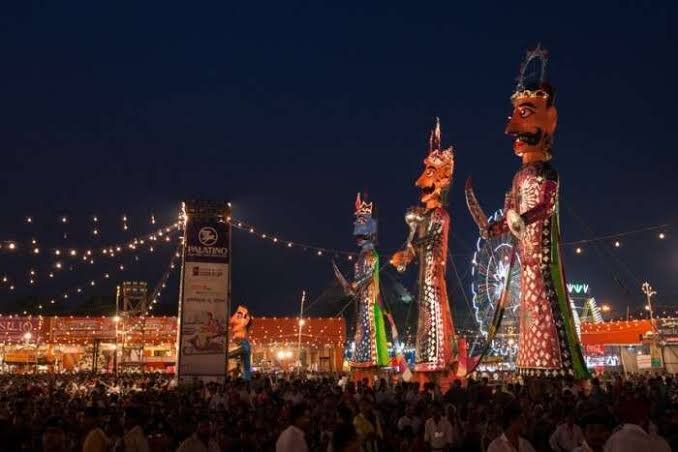
In some other places, the main attraction of Dussehra is Ravan Dahan. It involves the burning of towering effigies of Ravana along with those of his brother Kumbhakaran and son Meghnad. The burning of effigies symbolizes- the destruction of evil.
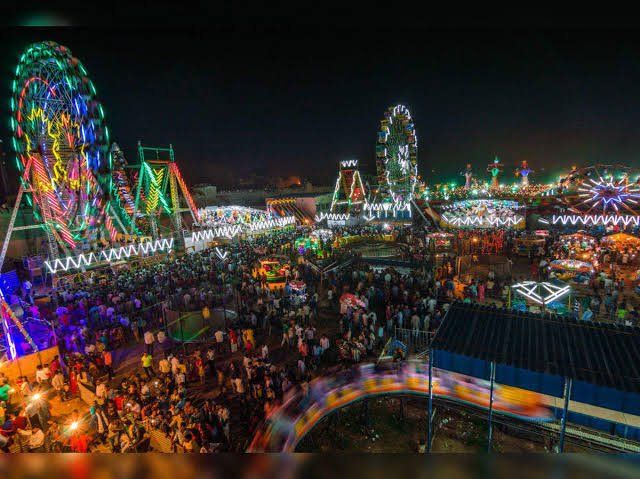
Colorful fairs and exhibitions are put up at many places that add to the frenzied atmosphere of the festival.
Dussehra celebration is an important part of Indian culture and tradition. The vibrant colours, the huge idols, the fair, the skits and the relatable themes are a major attraction for all. It holds a special place in the hearts of devotees.
MYSURU DASARA
Symbolizing the victory of good over evil, ‘Dussehra’, gets a special celebration in the state of Karnataka. Unlike the other places of India, where Dussehra is celebrated only for a day, the city of Mysore in Karnataka has its celebrations going for 10 days. Famously known as Mysore Dasara, the festival is celebrated in a grand fashion. Mysore Dasara is the ‘Naada Habba’ (State festival) of Karnataka State.
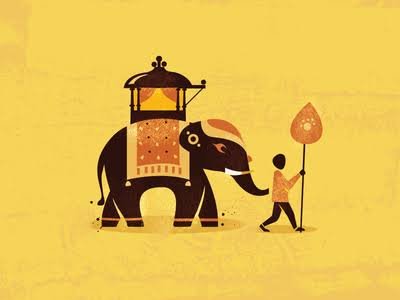
It is often referred to as the Royal Festival due to its enthusiastic vibe. The city celebrates this prominent and biggest Festival in a grand way displaying the beautifully decorated Elephants, Camels and Horses walking together in a procession. Lakhs of people visit the city every year during the festive season.
History of Mysore Dasara
The history of Mysore Dussehra goes back to the 15th century when Raja Wodeyar started these ten days celebrations.
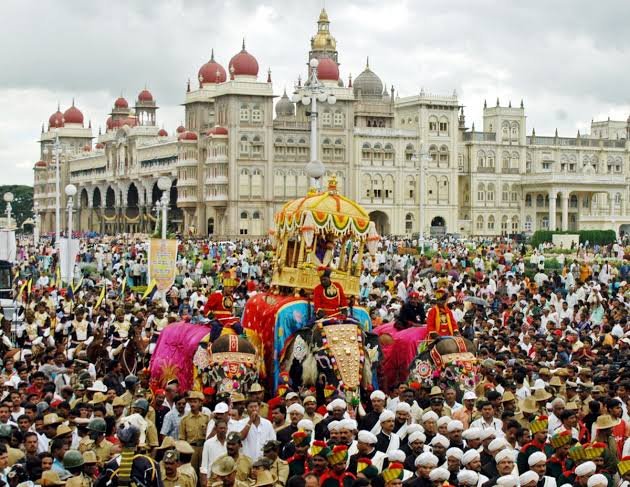
There is also a legend that says it was Goddess Chamundeshwari of the Chamundi Hill who killed a buffalo-headed monster called Mahishasura and restored the victory of truth over evil. The day on which he was killed is the day Mysore people celebrate as Vijay Dahsmi or Dussehra. The other nine days of Navratri represent the nine forms of the Goddess Shakti.
DASARA PROCESSION
There are a total of three parades held during the Mysore Dasara.
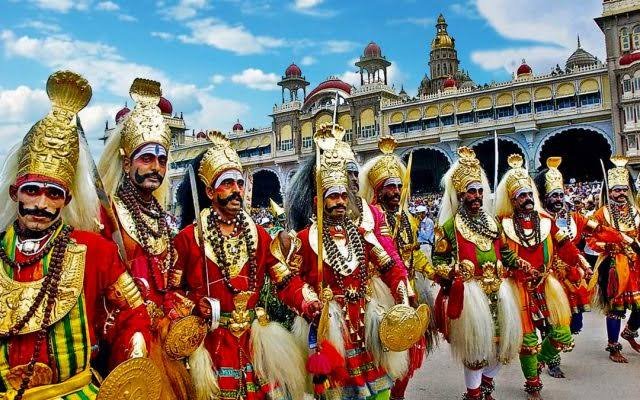
The first procession is on the ninth day of Dasara called the Mahanavami. This procession is held to worship the royal sword and is a time-old tradition which sees a parade of camels, horses, elephants, dancers and people dressed in the finest of liveries. The Royal Family also presides over the procession and takes part in it.
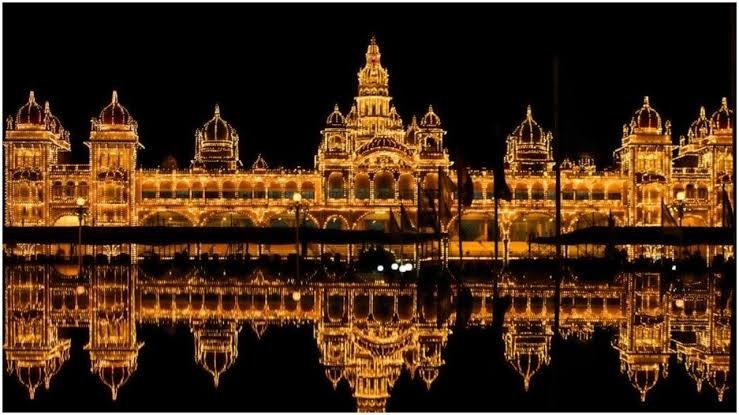
The following two processions are what comes to everyone’s mind when thinking about the Mysore Dasara. These happen consecutively on the tenth day of Mysore Dasara known as Vijayadashmi.
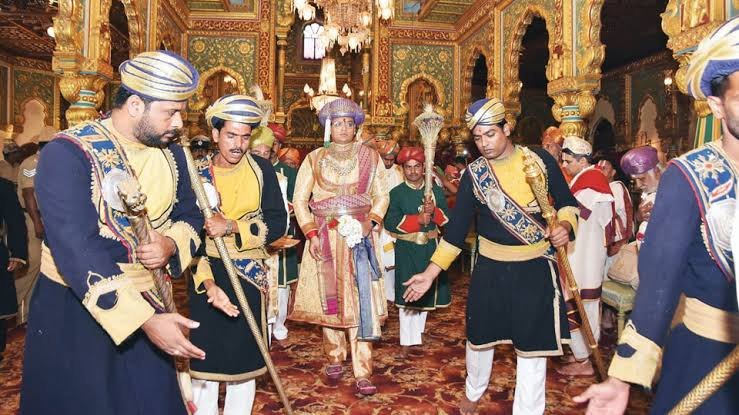
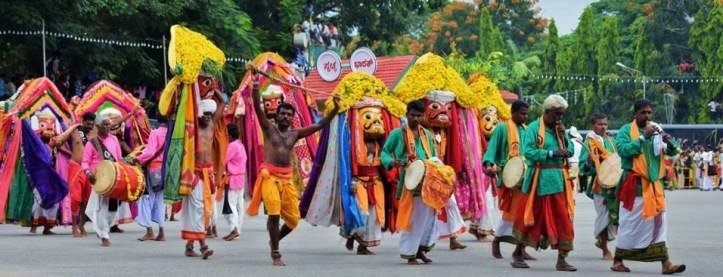
The first procession is the traditional parade called the Jumboo Savari which begins from the ornately lit Mysore Palace to the sacred grounds of Bannimantap. During this time, there are several aspects of the previous procession along with grander additions which include large bands, dance troupes, massive decorated floats that depict many important mythical events as well as a gathering of the armed forces. However, the main attraction in this unique parade is the idol of Goddess Chamundeshwari which is placed atop a golden seat on an elephant. This idol is privately worshipped by the royal family (which also takes part in the procession) before the parade and is then displayed for all individuals witnessing the spectacle.
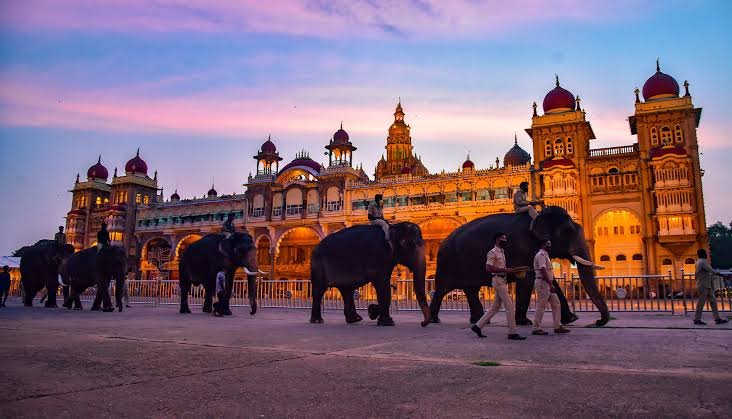
The parade makes its final stop at the Bannimantap Grounds which holds a Banni Tree that was used for hiding arms and later worshipped by the legendary Pandavas. The evening of Vijayadashmi, when the Jumbo Savari halts at the Bannimantap, the mesmerising torchlight parade commences. This parade is also called the Panjina Kavayitha and is specially organised to have a great end to an extraordinary festival.
OTHER MAJOR ATTRACTIONS OF MYSURU DASARA
1. The Best for the Last, Jamboo Savari
Elephants undergo strict training throughout the year so that they can carry out the grand procession in a calm and composed manner. These elephants are adorned with natural paints and accessories.
2. The Decked up Royal Palace
Reports and the locals suggest that approximately 100,000 bulbs light up the royal palace during this period. People often visit the palace with their friends and families to admire the magnificent beauty of royalty.
3. Delicacies of Mysore and Dasara
Food Mela is another major highlight of this festival in Mysuru. The mela is an opportunity for the locals and the visitors to taste some exotic local dishes like Shavige Payasa (Kheer), Huli Thovve (Gravy), Appi Payasa (Dessert), Kattina Saaru (Sweet Gravy), Mysore Pak (Dessert), PakadaginaChiroti (Dessert) along with many other local dishes that are prepared during Dasara.
4. Exhibition
Apart from shopping stalls and food stalls, the exhibition also has a lot of adventure and exciting activities to cheer up the audience and offer the visitors a memorable visit. Cycling, wrestling, film festivals, and pet shows are also a part of the festivities that continue for 10 days.
5. Bombe Habba
Bombe Habba or Dasarsa Doll is another highlight of the Dasara festivities in Mysuru. As per an old tradition, the dolls are displayed and arranging on odd steps of a platform (7, 9, 11), and these steps symbolize the nine days of this grand celebration.