 selectvenue
INTRODUCTION
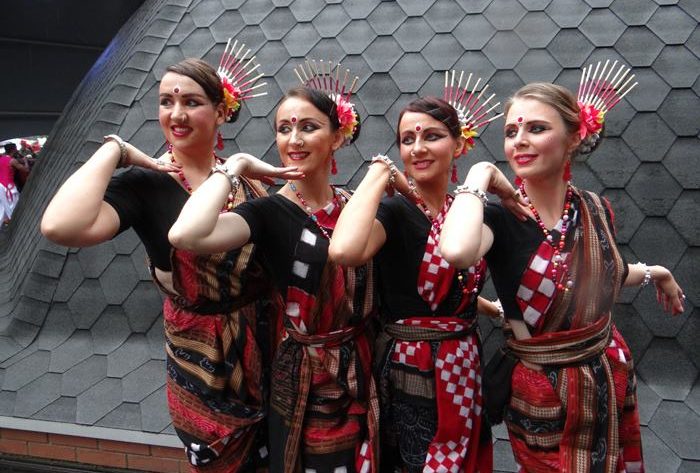
Sambalpur is a district in the Indian state of Odisha’s western area. As diverse as the state’s languages are, its culture is equally vibrant. The region takes pride in the development and evolution of some of the state’s most significant cultural achievements, including folk dance, music, and, most notably, the Sambalpuri saree, all of which have now become the face of Odisha to the rest of the world.

This will be a voyage that focuses only on folk art from this region of the state and its progress amid the multi-cultural expanse that is New Delhi. Rituals, customs, spirituality, and traditional art forms are all examples of rituals. The name of the art form comes from the city of Sambalpur in Western Odisha, which has its own distinct cultural character and has also become the global face of Odisha.

The group is proud of its dancing traditions, which include Dalkhai, Karma, Humo and Bauli, and Koisabadi. Dalkhai is the most well-known. Rasarkeli, Maelajada, Chutkuchuta, Sajani, Nachnia, and Bajnia are some of the other forms. who take part in these rites
Dalkhai is traditionally connected with unmarried females’ puberty rituals, which prepare young women and girls for their social and biological adulthood.
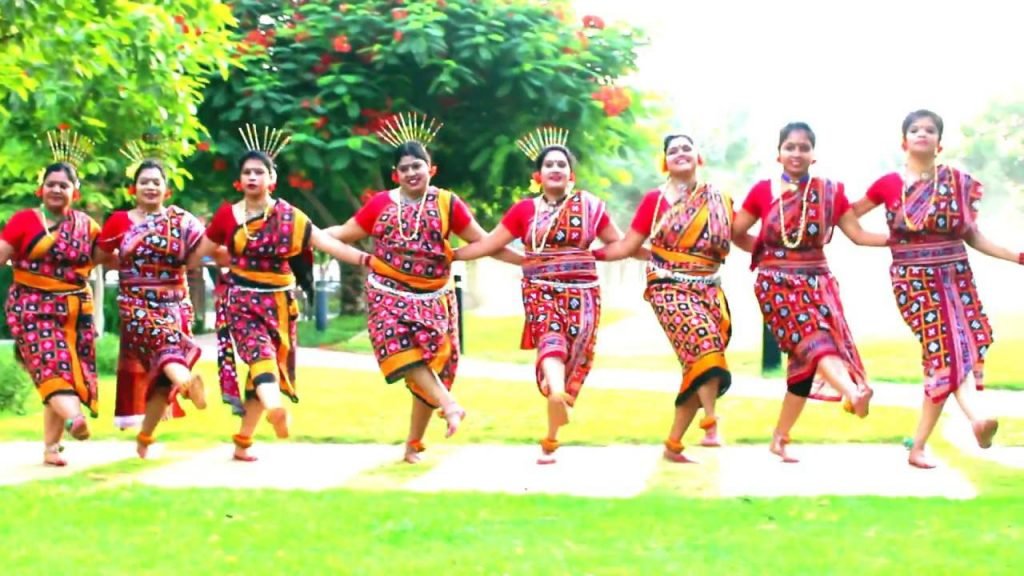
Other types of dance that fall under the Sambalpuri domain include:
Karma Dance is a tribal rite performed in honour of the deity Karam Sani, who bestows offspring. Dancers often dance in two rows to follow the rhythmic patterns.
Humo and Bauli are typically done on special occasions by unmarried girls. This dance genre is slower paced than other Sambalpuri dances and is frequently accompanied by slow motions.

Koisabadi is a tribal dance practised by the Gonds and Bhuyans, in which male dancers perform the act while clutching two sticks. Typically, the songs are based on the Radha and Lord Krishna legends
SAMBALPURI DANCE IN NEW DELHI
The Odia community’s and the state government’s efforts have resulted in a significant extension of Odia culture, particularly in the form of Sambalpuri traditional dances. A big opportunity to promote the art form also comes in the shape of the annual Republic Day parade, where Sambalpuri dance and its other indigenous forms have acquired popularity due to their upbeat beats and relatability. Even if you don’t understand the language,

the foot-tapping beats are attractive and intriguing enough to become playlist regulars.
Sambalpuri dancers perform in the Republic Day Parade.
Aside from the efforts of the national government, the Odia communities in Delhi have taken it upon themselves to make Sambalpuri dance a regular presentation.
Dalkhai, the most popular Sambalpuri dance variation, is a ritualistic folk art with eponymous songs sung on the occasion. This dance is popular among the Binjhals, Mirdha, and Soura tribes and is performed on festival occasions not only by tribal society but also by mainstream society.
SAMBALPURI DANCE INFORMATION

Sambalpuri dance, an essential aspect of Western Odisha culture, brings the community together via a magnificent fusion of dance and music. component at all cultural and religious celebrations Both Odias and non-Odias celebrate the Odia New Year with equal zeal in these activities, which include Nuakhai, Raja Sankranti– the celebration of femininity, Ratha Yatra– the holy chariot festival dedicated to Lord Jagannatha, and others.

The dance, which has gained popularity even in Paris, is now a typical appearance at non-Odia cultural festivals such as the Surajkund Mela. The dance genre has also been acknowledged and rewarded by New Delhi’s Sangeet Natak Academy, and it is actively performed by performers in the capital’s renowned cultural circuits.

Odissi dance schools in New Delhi have attempted to incorporate folk dances as part of an endeavour to preserve the folk tradition. Folk traditions like Sambalpuri have not yet been fully developed to their full potential due to their inconsistency with the scriptures and detachment from written records. However, there are those, like as Dr. Samaru Meher, who have taken it upon themselves to popularise and patronise folk customs, as well as to bring the traditions into the mainstream.
The essence of their soil is brought to the main city.
THE ART FORM’S LEGACY

This art form’s history is attributed to communities and tribal artisans in Western Odisha. However, in a multi-cultural city like Delhi, where any form can easily lose its core, keeping the art form loyal to its integrity and alive is a struggle. However, the dance has succeeded to capture people’s hearts. by incorporating the art form into mainstream culture The infamous attempt by Coke Studio to reproduce the most iconic Sambalpuri song- Rangabati- drew a lot of scepticism from the Odia audience, but it also succeeded in instilling Odia culture in music-loving individuals.
Dance is no longer a foreign concept. Realizing the true spirit of the dance form, which is a dance for the public, the notion of bringing it to the masses in Delhi through Durga Puja pandals and other community events has been the simplest and fastest manner of creating knowledge about the performing art.
While Delhi is a centre of activities and cultures, and adaptation is essential, migrant groups work hard to protect their rights.